The Last Jedi: A Hate Letter
Reviewing a casualty of 2017
Summary: Peter Banks critiques The Last Jedi as a fundamentally flawed film that juggles three disconnected subplots while producing nothing of narrative substance. He argues the film's inflated critical acclaim resulted from politically influenced reviews during the early Trump administration, while audiences correctly rejected it with a 43/100 score. Banks contends the movie suffers from corporate MBA-driven decisions and anachronistic 2010s cultural sensibilities, particularly through the main character Rey, who lacks likeability, competency, and agency. He concludes the film fails to justify its own premise by leaving the original heroes as complete failures without addressing why the next generation would succeed.
I. In the Beginning
I just recently rewatched The Last Jedi, aka the 2nd movie in the “Sequels” trilogy, and genuinely it was one of the worst movies I’ve seen in my entire life. Not only was the story, or should I say 3 simultaneous unconnected stories, extremely rushed, but the characters were genuine abominations.
To be honest, I was surprised by how much I hated the movie on a 2nd viewing; I remember mostly being confused back in 2017 as I left the theater. But now, with almost a decade of hindsight, I can say definitively any confusion I had was cope. The Last Jedi is just bad.
The more I think about this fact the more tragic it becomes. Because even if the sequels weren’t my cup of tea back in the late 2010s, it had been my sincere hope that, similar to the prequels—which had been loved by children—they would find their cultural footing. Sadly no, it seems the consensus is basically in agreement with me that the entire sequel trilogy is worse than either the originals or the prequels. There has, to the best of my knowledge, been zero long cultural effect from the films.
I’ve heard people defend The Last Jedi as the “best” of the trilogy. Given I never finished the series and still need to watch the last one, I can’t say for sure. However, I can say that I preferred The Force Awakens.
Overall, I would give this movie a clear 1/10. Watch literally any other movie.
II. The Reviews
What is most astounding about this movie, in addition to its quality, is the degree of glazing it received from the press back in the day. If an alien only had access to movie reviews it would walk away with the impression that it—yes, it—was the 2nd best Star Wars movie; only barely edged out by the original.
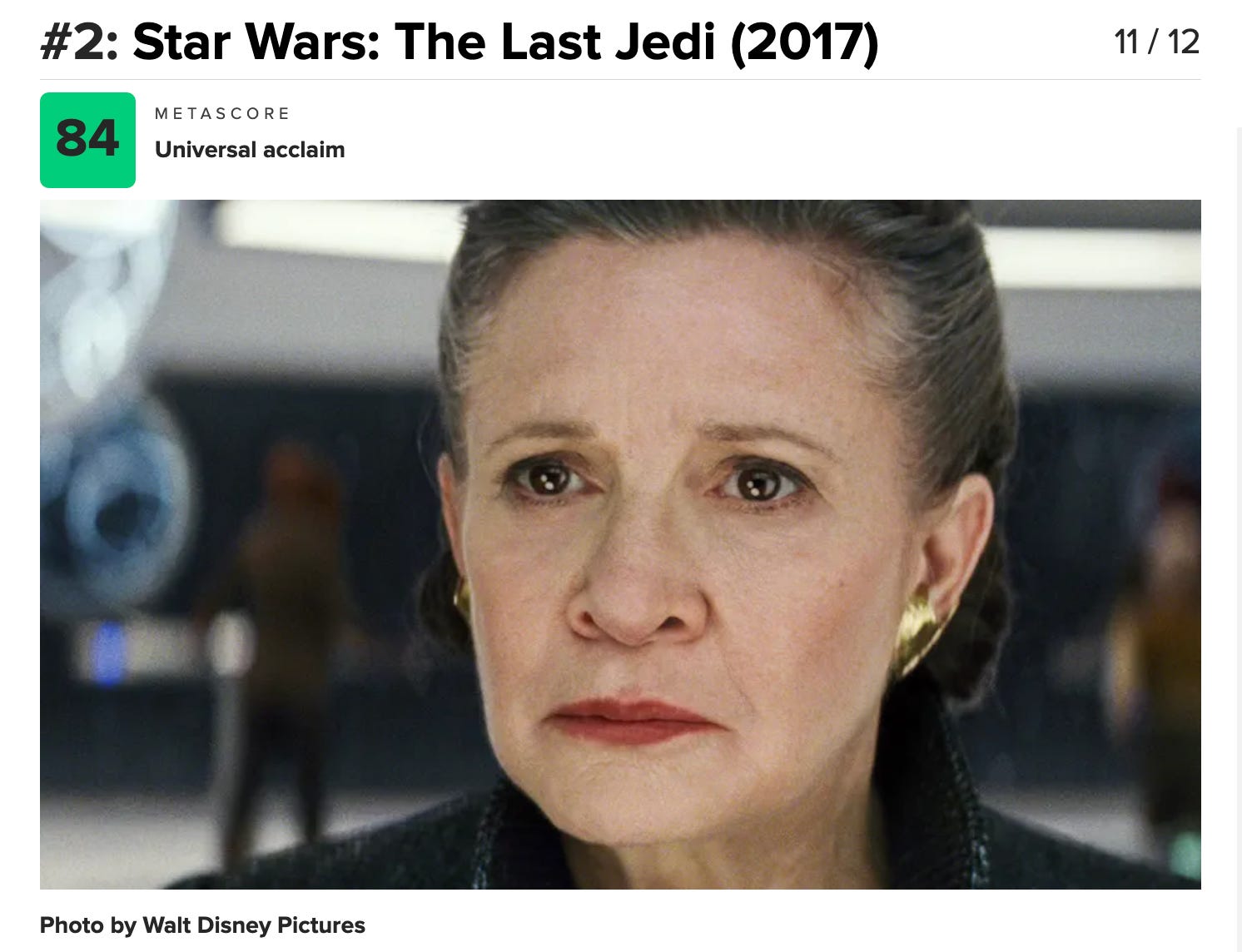
Subjectively, all I can say is wtf? Even now the movie has a Metacritic score of 84 along with a sterling “Must See” badge. Literally, the movie is described as having "Universal Acclaim.” Lol. Lmao even. To contrast the sterling critics’ reviews, the audience score is abysmally low, sitting at a 43.
The gap between professional and public reviews can only be understood in its historical context. This movie was released in the winter of 2017 during the confused and paranoid early years of the Trump administration after all. I’ll talk about this in much more detail later, so for now let’s get back to the reviews.
Highlighting some of the best from Metacritic:
“It’s less Star Wars as you’ve never seen it than Star Wars as you’ve never felt it.” – Robbie Collin from The Telegraph. He gave the movie a 100.
Excuse me, what?
“The Force is, to me, still silly Star Wars mumbo jumbo, but Johnson finds a way to underscore it with humanity…” – Richard Lawson from Vanity Fair. He gave the movie a 90.
True, Richard, very true. Star Wars is silly and full of boring, confusing mumbo jumbo.
“Yes, the latest Star Wars installment is here, and, lo, it is a satisfying, at times transporting entertainment. Remarkably, it has visual wit and a human touch, no small achievement for a seemingly indestructible machine that revved up 40 years ago and shows no signs of sputtering out (ever).” – Manohla Dargis from The New York Times. She gave the movie a 90.
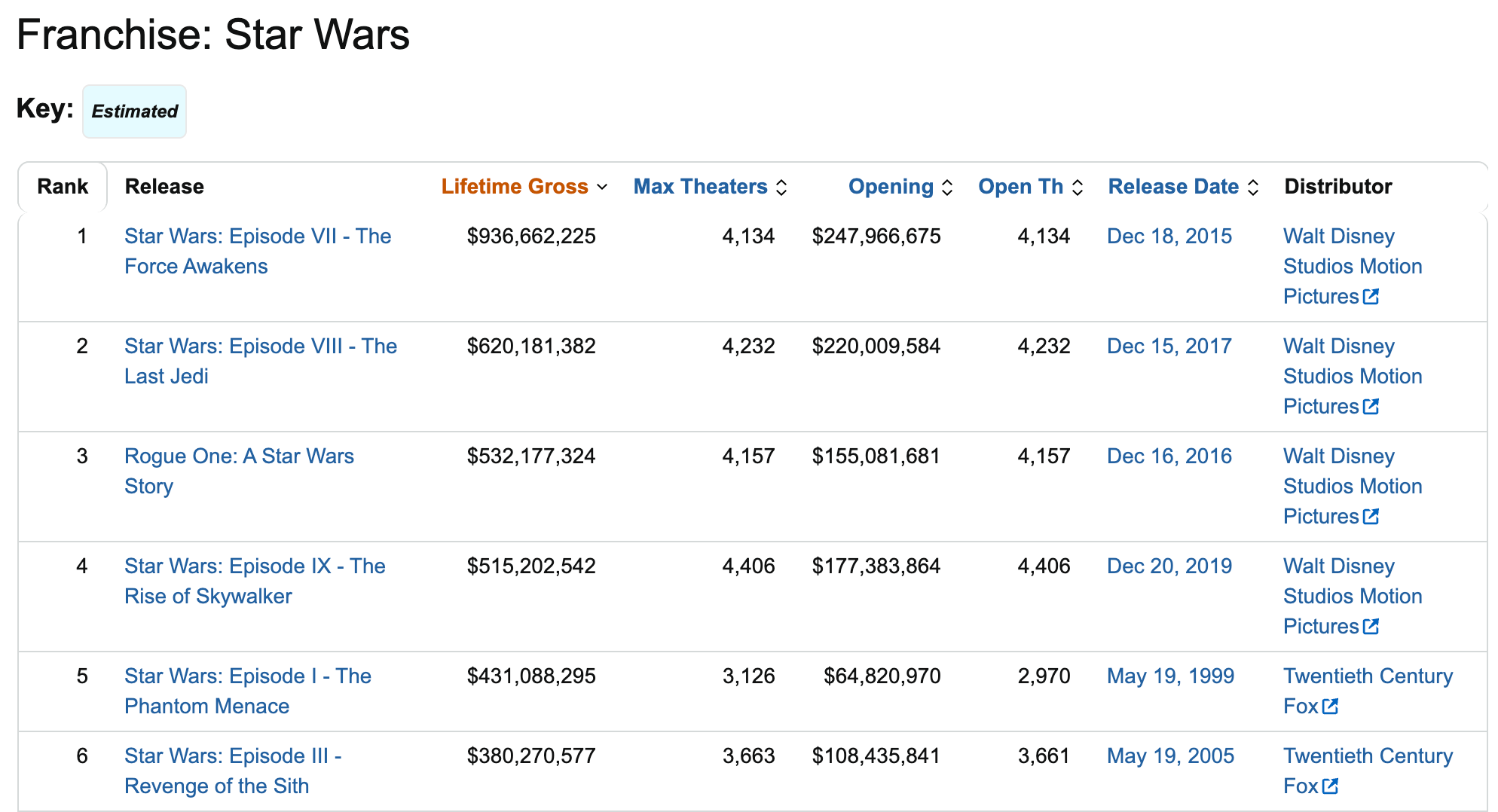
Contrast it with Revenge of the Sith—probably my personal 2nd favorite Star Wars movie after The Empire Strikes Back.
The movie has a 79% on Rotten Tomatoes and a 68 on Metacritic.
Here is what Anthony Lane, giving a 10 out of 100 from The New Yorker, had to say about Revenge of the Sith:
“The general opinion of Revenge of the Sith seems to be that it marks a distinct improvement on the last two episodes, The Phantom Menace and Attack of the Clones. True, but only in the same way that dying from natural causes is preferable to crucifixion.”
Alas, forever the adult intellectuals will fail to see life through the eyes of children, and the sun will continue to set in the west.
It isn’t just the reviews though. The secondary analysis is somehow even worse. At the time there was a widespread belief that reactionary trolls online—who were seen to have coordinated to get Trump elected—were now striking again to smear the movie. This meant there was a moral imperative, subverbally if not always said in so many words, for people to balance the trolls out by being extra defensive.
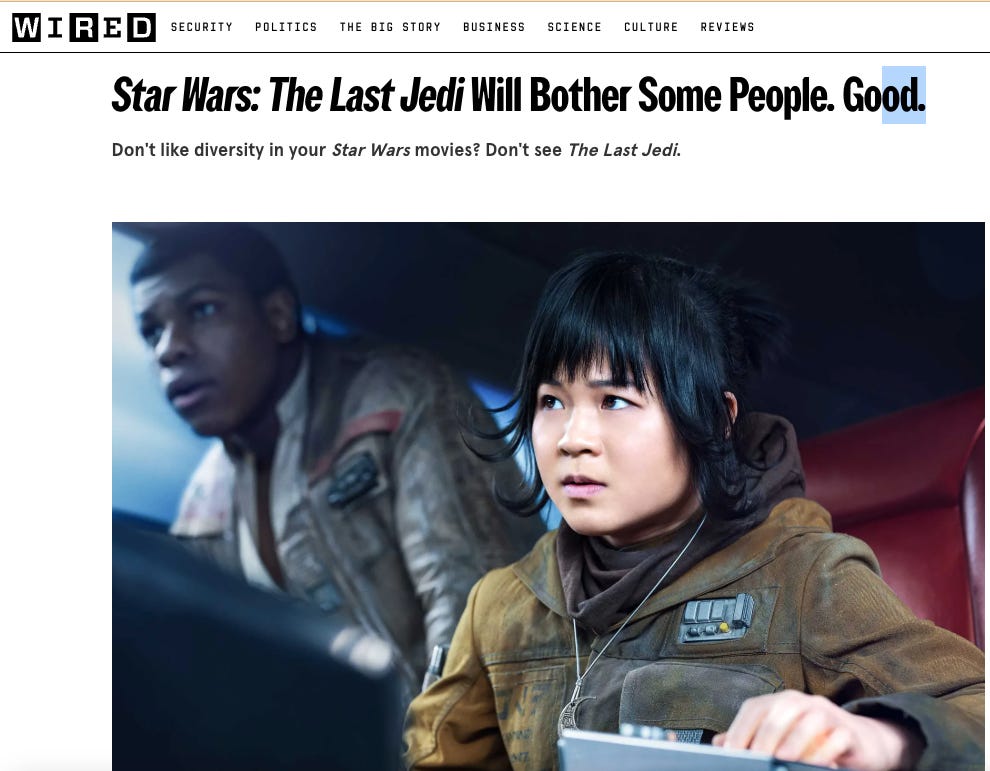
Take for example:
“Just How Seriously Should We Take This Star Wars: The Last Jedi Backlash?
Is this really the most divisive installment in the Skywalker saga?” by Vanity Fair, published in December 2017.
In this article, Joanna Robinson tries to lay out the mainstream argument of the time:
“It should be noted that the audience members most likely to register their opinions on Rotten Tomatoes are a very specific, very reactionary kind of fan. In the less self-selected space of CinemaScore—where general audiences are polled as they leave the theater—The Last Jedi earned an ‘A.’ Yes, the very same rating as the well-liked Force Awakens.”
Towards the end of the article she says the following:
“No matter what the hot takes try to tell you, Episode VIII’s legacy will not be decided or quantified this weekend.”
I couldn’t agree more.
I’m pointing this out because I think, in retrospect, this was actually an important moment in our culture. I’ll say for myself, the repeated pattern of ostensibly apolitical commentators defending objectively horrible media because of partisan tribal loyalty really burned me on the credibility of the press in general. It sounds silly, but to a young man this stuff was actually important to me. These communities were my communities, so seeing a person desecrate Star Wars, for example, and then being told what I had actually seen was an impressive work of art—well, it didn’t blackpill me, but it did make me question what else these people were willing to lie about. Or perhaps even worse, what else they were unable to see?
If you want more of my thoughts on this, check out a video I made:
III. The Movie
Now getting into the actual movie. The principal problem with the film is that it simultaneously tries to do too much and too little.
Despite an enormous amount of yapping and very expensive set pieces, functionally nothing happens during the whole runtime. Whatever few events do occur are all so disconnected from each other that they might as well be totally different movies. I mean this literally, since you can neatly divide the plot into 3 subplots which only tangentially interact at all.
1. The Resistance Retreat
The Resistance, led by General Leia Organa, is on the run. After the First Order tracks their fleet through hyperspace, they are forced to come up with another plan. Poe Dameron had previously disobeyed orders which allowed him to destroy a dreadnought, winning a battle but leading to the loss of their bombers. This means that when Leia is incapacitated, Vice Admiral Holdo boxes Poe out of her secret plan to evacuate the fleet to Crait. The fact he is excluded from the planning causes tension, ultimately resulting in a failed mutiny. Holdo finally reveals her plans to Poe, and he is forced to acknowledge he was wrong just in time for the First Order to see the escaping ships—due to Rose and Finn screwing up—and murder most of the escaping Resistance.
Holdo, seeing everyone dying, decides to perform a hyperspace suicide run through the First Order flagship; something which, for some reason, no one else who sacrificed themselves thought to do. The survivors are able to reach Crait for a final stand. The First Order arrives, and right before they can destroy them all, a Force projection of Luke arrives and allows them to escape.
2. Rey, Luke, and Kylo Ren
Rey arrives on Ahch-To seeking Luke Skywalker. Luke, guilt-ridden for failing Ben Solo and creating Kylo Ren, refuses to return. He eventually gives Rey fragments of training but remains cynical about the Jedi. Meanwhile, Rey and Kylo are mysteriously connected through the Force. They communicate across distance, form a bond, and glimpse each other’s conflicted intentions. Rey believes she can redeem Kylo and leaves Luke, who later realizes his responsibility.
In a rage, Kylo kills Supreme Leader Snoke and offers Rey power at his side, but she refuses. Kylo then claims leadership of the First Order. Luke finally projects himself through the Force to duel Kylo on Crait, buying time for the Resistance before dying from exhaustion. Rey shows up in time to move some rocks and let everyone out of the cave.
3. Finn, Rose, and the Canto Bight Mission
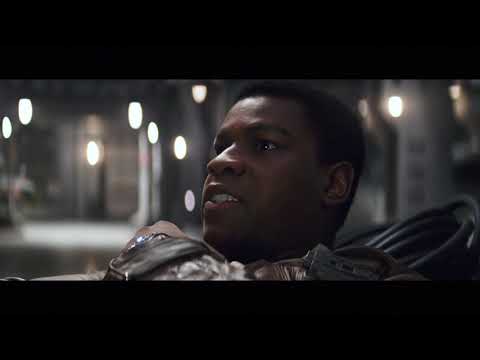
Finn, trying to flee, meets Rose, a mechanic who worships him. Her tune changes rapidly when she realizes he is trying to escape, and so she stuns him. Upon having a conversation about tracking—which is so absurd I just have to link it:
They hatch a plan—encouraged by Poe—to disable the First Order’s hyperspace tracker. The plan is to travel to the casino city of Canto Bight so they can find a codebreaker. However, because they park their spaceship on a random beach, they are arrested and saved by a totally unrelated thief named DJ. DJ, who has borderline godlike technical powers, stands up and just walks out of the prison, letting them out also. After then helping them infiltrate Snoke’s ship, he turns against them so he can cash out. Because of his betrayal, the Resistance’s escape is exposed and Holdo’s entire plan turns into a disaster.
Finn and Rose manage to escape and make it to Crait. They then volunteer to try and take out the cannon destroying their base, and right as Finn is about to sacrifice himself, Rose stops him and their defenses are destroyed. Rose and Finn then kiss and ostensibly sneak back in because they escape with the rest of the gang after Luke’s death.
Note: yes, the only way their plot—despite being the most complex—interacts with the main story is by making Holdo’s plan a pseudo-failure and then Rose stopping Finn from destroying the siege gun, which directly results in the death of Luke.
The fact the movie is trying to fit 3 basically unconnected stories together is magnified by the heavy use of iconic Star Wars “transition” shots. Once you include these, each plot gets about 30 minutes of substantive screen time, which ends up leaving an enormous amount of material to happen “off screen.”
One of the effects of these plots being so rushed is the audience is expected to just accept changes to relationships between major characters with zero justification. Rey and Luke suffer a lot from this dynamic because of how important they are to the story, but Finn and Rose are an order of magnitude worse.
IV. The Smell of a Different Era
Something that permeates the entire show is the degree to which it has “aged” and now comes across as painfully late 2010s. At times, the level of cringe reaches the point I feel the best way to categorize the movie is as a paper bag for LA executives to hyperventilate into over Trump—who knows, perhaps history will vindicate their panic.
But probably the most annoying way this manifests is an avalanche of girlboss scenes where characters who you DON’T LIKE are being rude to people who you DO LIKE. From the vantage point of 2025, it can seem like all of Trump 1 was dominated by his battle with Science™ and BLM, but these were only the final, most intense forms of the moral convulsions that rocked this country. His first two years were, anecdotally, mostly dominated by the topic of Trump’s sexism and the role that misogyny played in his original election. Even in my own life, the people who changed from being 2012 Romney voters to 2018 Dem voters were middle-class women disgusted by our orange president.
As a result of this early initial wave of anti-Trump sentiment, we got movies like Ocean’s 8 and also a lot of the cast of this movie. Admiral Holdo is by far the best example of this because her role is almost exclusively to be rude to Poe and make him seem foolish. This is doubly tragic because Poe was probably the most interesting character in The Force Awakens.
Star Wars has always had the reputation of being “nerdy white guy” coded.
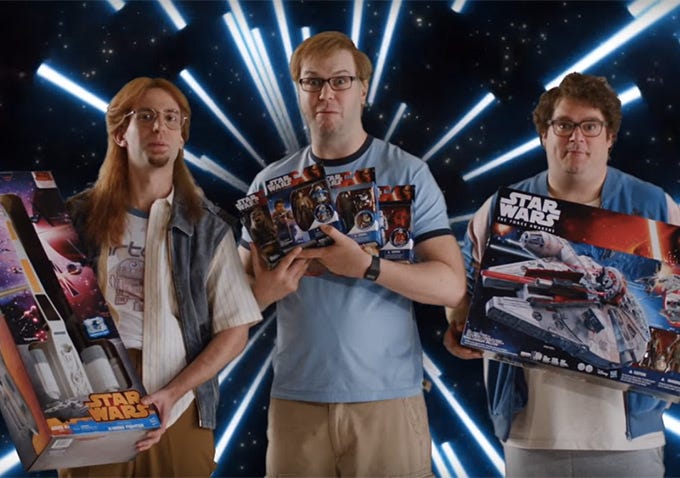
And in a sense this is true—the audience has always been male-biased and the cast for both the sequels and prequels is mostly white men. I would argue that even if this is true in a very limited sense, Star Wars has always been able to maintain a uniquely wide appeal, and I know many female fans of the series. But in 2017, having a “nerdy white guy” coded movie would inevitably result in being dragged by freaks on Twitter—where reviewers and other Hollywood people hung out—so this film does everything in its power to preemptively refute any such allegations.
Needless to say, making art to avoid offending overly online neurotic people is not how you make something compelling, and the film suffered from being a product of its time.
V. Keep the MBAs Away from the Writers Room
I know someone who claims to have been involved in the casting process for The Force Awakens, and what they told me was Disney knew it wanted to have a double lead; they also knew it was going to be one woman—implicitly a white woman—and a Black man. The original plan had been for the Black male, who ended up being Finn, to lead, but that the actress for Rey was “so good” they decided to make her the “main” character instead.
Take this story with the suitable amount of salt a 2nd-hand, half-recollected fact should have, but I share it because I think even if it isn’t literally true, it captures something essential about this movie. Rather than feeling like an artistic project where someone was allowed to have, and then implement, a vision, instead the movie feels like it was the result of box-checking and purity spirals.
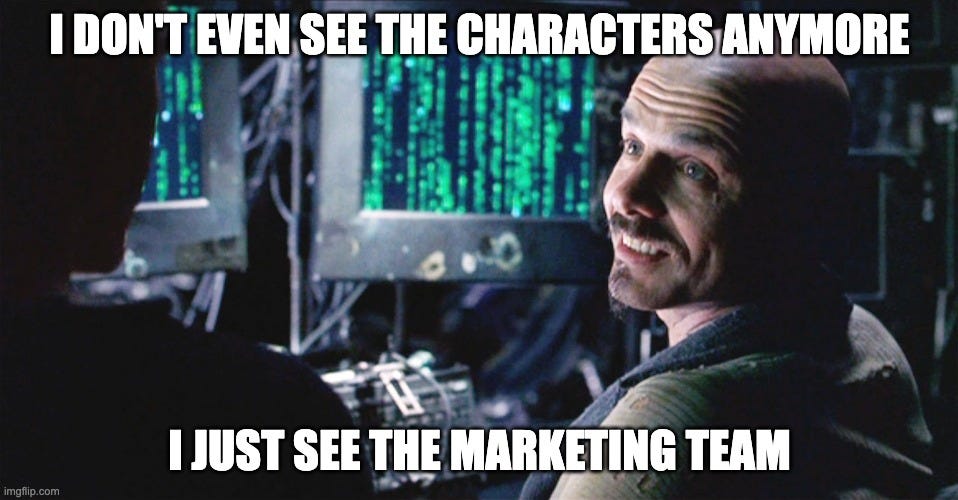
Every scene has the stink of MBA corporate analysis, and every imperfection and human element has been tirelessly ironed out until all you can see is the target demographics.
If you assume the basic shape of my contact’s story is true, then the main lesson should be to fire everyone involved in the casting process and just select actors via sortition. Because Finn is fine, good even, but Rey fucking suuuuuuuuucks. The idea someone could have seen Daisy Ridley’s performance and thought it was good enough to change the direction of the movie genuinely makes me question my own sanity.
I should not dwell too long on the eldritch horrors which swim in the mind of a Hollywood writer, lest I go mad.
Somewhere Brandon Sanderson laid out a theory of characters where they all sit on a spectrum with 3 major traits: likeability, competency, and agency. For a character to be good, they need to have high scores in at least one, ideally two, of those traits, and they have to be “moving” somehow.
This is why we like Luke in the originals so much: he has high agency, high likeability, and we get to follow him on his journey to competency. Even Anakin in the prequels becomes more powerful and agentic as he becomes less likable.
By contrast, in the full 2 and a half hours this film takes of your time, Rey doesn’t change at all while still somehow managing to have low scores in all three categories.
Likeability:
The entire movie Daisy Ridley comes across like she hates Star Wars. Maybe this is unfair, but genuinely she doesn’t seem to be having fun at all. Because she isn’t “cool” like Solo—no one in the last 50 years has been as cool as Harrison Ford in his prime—her blasé attitude towards the setting doesn’t come across the way I imagine the directors had hoped.
Rey is also the main character, and to some extent they are trying to make her into the heroic replacement for Luke. This means her role should be as the übermensch who rises above the moral dichotomies presented and in turn resolves the core conflict. Rey does not do this, although the movie spends about 30 seconds pretending she might.
Her evident lack of interest in her role as the savior gives all of her moments on screen a sterile, confused emotion, which frankly just makes me uncomfortable.
Competency:
Over and over again we are told how “strong with the Force” Rey is. But since every character is able to do insane Force acts, she feels very weak. Luke, Kylo, and Snoke are without a doubt more powerful than her, and as a viewer she comes across as an amateur.
Beyond being a Jedi she does basically nothing, and we are presented with no evidence she is talented at anything.
Agency:
Again, Rey shows functionally zero agency. Time and time again she is just blown with the wind and sort of floats wherever the story takes her. It is Snoke that connects her and Kylo, for example, and it is Kylo who decides to kill Snoke. The closest she gets to “doing something” is when she first goes to join up with Kylo—a mistake—and then when she says no to joining him, after he just saved her life.
So if she isn’t agentic, likable, or capable, what is her point? The obvious answer is she is what the suits wanted because she looked good on some MBA’s projections.
Business school is very useful and a lot of people learn a ton, but I’m of the opinion that the more Hollywood and other aspects of American culture have been “corporatized,” the worse their products have become. You just can’t run artistic projects like a factory without fundamentally compromising what they are.
And let’s be clear. The MBAs were in fact 100% correct—these movies made a completely insane amount of money For all of my criticisms of this movie, it accomplished exactly the objective the suits had in mind.
VI. Retracing a Legacy That You Hate…
For my final section I want to talk about the way the movie deals with its “legacy” and world development.
It seems like Disney knew they wanted to have an aesthetic style which matched the original trilogy, but they weren’t sure how exactly to do this. Their brilliant plan appears to have been to try and “soft reset” the franchise to the opening shots of A New Hope.
The problem with this plan, of course, is that it would turn the central cast of the original trilogy into utter failures. Han Solo? He has become a divorced dad whose son turned into the embodiment of evil in the world, now wandering the stars. Leia? The Republic seems to have instantly collapsed and is much weaker than some neo-imperial resurgence. And worst of all, Luke has turned into a bitter old failure of a man who was never able to restore the Jedi and now hides on a rock only discoverable via a series of clues.
Nevertheless, despite the fact that they are all utter failures and clearly their model of revolution and reform was a disaster, the entire world seems to still look at them, these pathetic aged figures, as the only hope. It’s insane! They won and then in their victory failed!
What would another rebellion accomplish? Will they win more decisively than the old one and, if so, what possible changes will you make to avoid the exact same problems this time around? The movie makes no attempt to even address these questions because it feels like the writers don’t have answers themselves.
Instead, it is obsessed with the idea of handing over the baton to the next generation of characters, who by every measure are less interesting or moral than the previous batch, with the idea that this time “they” will get it right.
Again, the movie came out in 2017. At the time the atmosphere was permeated with two major emotions. First, there was a sense of “majoritarian” outrage. Anti-Trump activists felt like they represented the vast majority of people in this country and that all they had to do was find the right “spark” and it would destroy Trump.
This meant that anything seen as “damaging” to him was endlessly analyzed and hyped up as the “thing” which would take him down. After Luke is killed, Poe says: “We are the spark that will light the fire that will burn the First Order down.” And this really is how a lot of people felt at the time.
However, this emotion of inevitable victory was also cut by a total lack of explanation for why so many people continued to support Trump and why the liberal project which had defined the previous 70-odd years seemed to be eroding. Instead, as more and more of these “sparks” landed and a fire refused to start, people began to feel upset at “society” in general.
This dual emotion resulted in a movie that cannot decide if the original cast—much like America’s past—was composed of heroes or utter failures. On one hand, the First Order is able to maintain absolute military supremacy, and it is unclear what their escape will even accomplish. On the other hand, everyone seems confident in the emergence of an inevitable revolution.
VII. Conclusion
In the end, The Last Jedi is just bad and that makes me sad. You can psychoanalyze the film forever and keep finding more, but it is just not a good movie. With space we can say that the online community was much closer to the truth than professional reviewers. If I were the CEO of Disney, I would just trash the entire project and restart the sequels. I just ask that this time you don’t ruin all of my favorite characters out of spite.