Oblivion Remastered: Review
It's awesome go buy it.
Summary: Peter Banks reviews Bethesda's Oblivion Remastered, comparing it extensively to Skyrim to argue that Oblivion, despite being 20 years old, is unironically better than most modern games and possesses superior world design, NPC behavior, and quest structure despite Skyrim's improvements in UI and gameplay feel. The author discusses the shadow-drop marketing strategy's success, theorizes about declining creativity in modern game development correlating with aging developer demographics, and addresses controversy surrounding gender options in the remaster's character creator.
One of the most exciting moments in gaming history just happened on the 22nd of April: Bethesda shadow-dropped a remaster of Oblivion, officially out of nowhere (unofficially, rumors had been going crazy for a while). I have spent an embarrassing amount of time playing the game since its release1, and it has been amazing. Oblivion was one of my favorite games as a kid, and its 2007 release - along with the 2011 release of its sequel Skyrim - hit at that perfect time in a person’s life to leave the maximum possible impact. Since I’m calling this a review, I would suggest y’all 100% go check it out; it isn’t that expensive, and if you have Game Pass you can play it for free. Oblivion Remastered is the same game, quirks included, and that is exactly what I wanted.
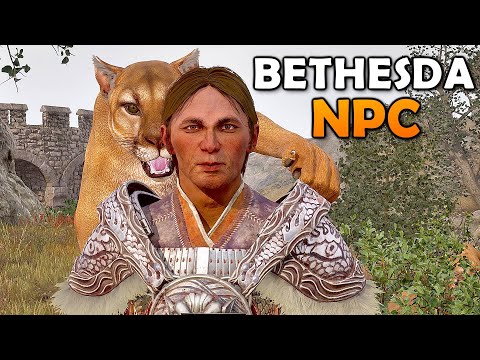
It has been fascinating replaying Oblivion because it has made me appreciate both it and Skyrim more than ever, for different reasons. Specifically: first, it is astounding that Oblivion - which is almost 20 years old - is unironically better than most modern games. I recently tried playing Avowed, and even mentioning them in the same sentence feels offensive2. Second, Skyrim has recently received some flak from hypercritical millennials, and playing Oblivion has confirmed they are retarded. Skyrim really is the greatest game of all time3, and it isn’t even particularly close.
So I want to take the time to do a little comparative study between Bethesda’s two fantasy masterpieces while I yap about the game.
World
On paper, Oblivion’s (16 mi²) map is only slightly larger than Skyrim’s (14.3 mi²), but it feels MUCH larger. This size comes with the drawback that a lot of the content feels random, almost like everyone is playing some procedurally generated map with a stable seed. By contrast, Skyrim’s map feels truly handcrafted.
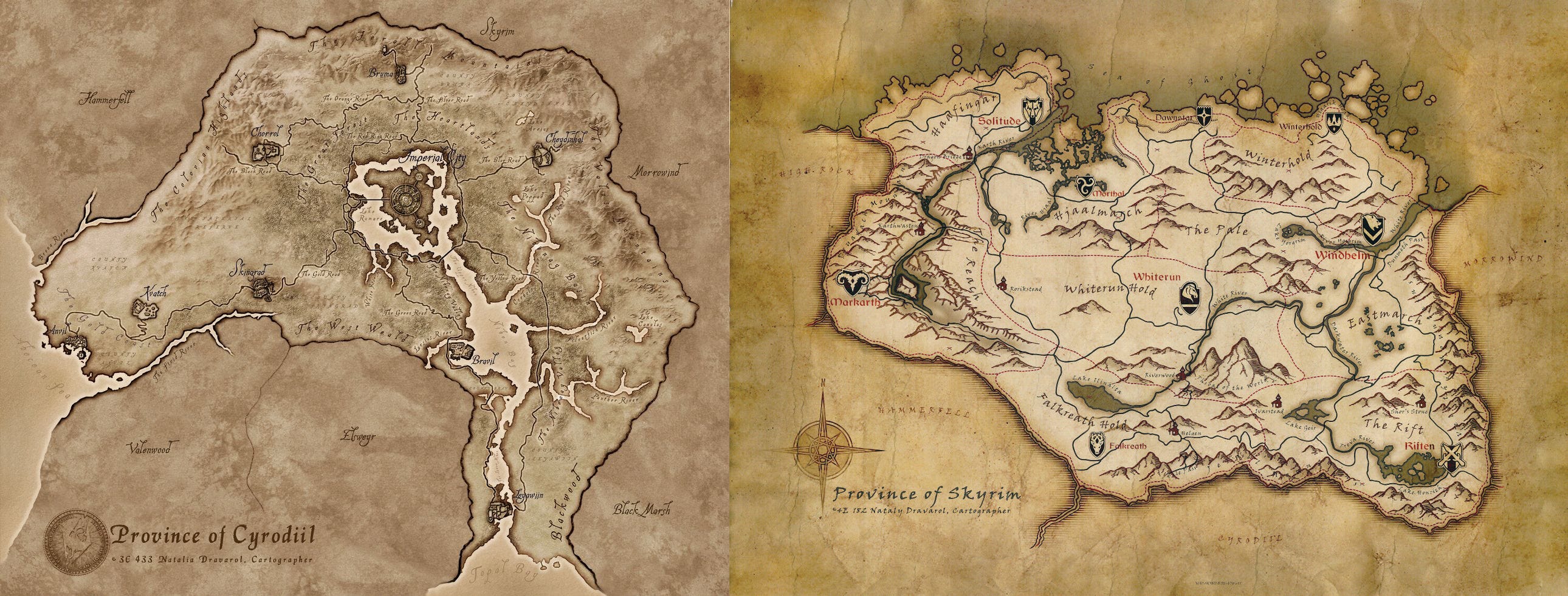
But Oblivion really does feel much, much larger. Cyrodiil - the province the game takes place in - is effectively a big bowl with everything but the edges full of things to do and see, whereas Skyrim has a lot of obstacles, like mountain ranges, that make walking in a straight line difficult and create big splotches of semi-empty space. But it isn’t just the geography: Oblivion is just more full than Skyrim. In theory, both games have the same number of cities - Oblivion has nine, including the Imperial City, and Skyrim has nine holds - but in practice, Oblivion totally walks away with it, since all their cities are real. Only Kvatch is mostly empty (for obvious reasons if you play the game), and it lacks the utter bullshit of Morthal and Dawnstar.
In addition to more and larger cities, Oblivion also has more little villages - if you’ve only played Skyrim, think of Riverwood - almost all of which seem to have little side quests.
Here you can see the real trade-off in world design: Oblivion almost always has more but what Skyrim has is of higher quality. Or at least, the stuff in Skyrim is cooler in a way that’s deeper than just graphics, and a game being cool is a big part of what makes it good.
Compare the cities, for example. Here are screenshots of entrance to three of the more distinct Oblivion cities:

And here are screenshots of the entrance to three of Skyrim's more distinct cities:

I for one think Skyrim’s look more distinct. Now I also must confess some of this is that I'm just a slut for Nordic stuff4, but I really think Bethesda did an incredible job in Skyrim integrating that aesthetic into the environment in a way Oblivion doesn’t quite achieve — at least outside of the Imperial City.
The entire world of Skyrim is brimming with charm and little things to discover: there is obvious stuff like dragon attacks, but there is also little things like giants with their mammoth pets, Orc strongholds, and the Forsworn. I had never really appreciated how amazing the world design of Skyrim was until I replayed Oblivion.
Gameplay
Both Skyrim and Oblivion have very similar gameplay at the atomic level. You increase certain skills - say, archery - by doing that thing - shooting a bow - and when you have increased enough skills, you level up, which allows you to boost your attributes and unlock bonuses. The similarity goes deeper than just leveling. They differ in important ways, but the bones are functionally the same, and it rocks!
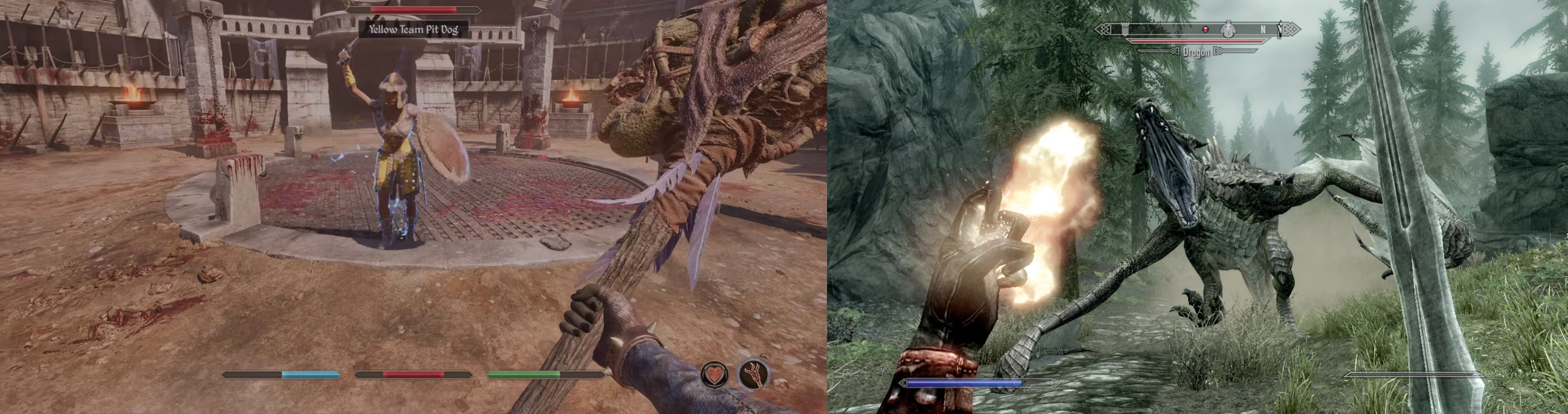
I’m not going to go through every system, but they share a lot of core DNA — honestly, if they don’t cut all this stuff out of Elder Scrolls 6, I think this system alone will make that game fun.
One of the most important aspects of Bethesda gameplay is the NPCs. And this is an area where Oblivion stands head and shoulders above any other game I’ve ever played - even if they are off in some weird island on their own. In Skyrim, the NPCs have a day/night schedule, but mostly they seem to exist for you as the player. In contrast, the Oblivion NPCs seem to exist in their own little surreal world. You can poison them by stealing all their food and leaving only poisoned items around for example. Entering a public place often creates a cacophony of NPCs having the silliest and most endearing conversations possible. The voice acting here is so great - Bethesda could have gone serious, and it would have been cringe, but the over-the-top affectation is just perfect.
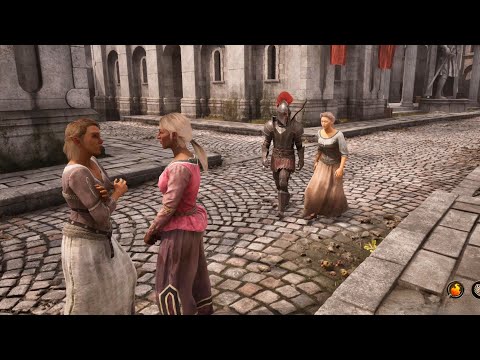
Another area Oblivion beats Skyrim is questing. In every Bethesda game, quests are basically the same: some NPC has a problem and asks you to solve it. Sometimes this is talking to another NPC, but normally it’s killing someone or fetching something - almost always inside some cave or fortress filled with bandits. This is a solid system that has persisted for a reason.
Except for the Fighter’s Guild, Oblivion’s questlines are all longer and more interesting. I’ll hold off on spoiling too much, but rerunning the Dark Brotherhood has been a blast.
The major improvements in Skyrim from a gameplay perspective come mostly in feel and UI. Skyrim's UI is so incredible that going back to Oblivion is a little painful. The map especially is vastly inferior. But everything in Skyrim is just so beautiful, and I wish more games would go back to that style instead of the cursor-dominated UI that exploded after Destiny.
Everything just feels smoother in Skyrim. Stealth is better, shooting fire out of one hand while wielding a sword is an incredible feeling, crafting at a forge - all little things that add up to a big difference. World-level scaling is a great example of a small alteration massively improving the game.
In Oblivion, the entire world scales 1:1 with you. Early on, you fight wolves and imps; by late game, bandits wear the best armor. You never really get stronger. Worse, loot scales too, meaning early dungeons only have 10 gold and are full of garbage.
Skyrim, by contrast, sets min and max levels for areas and only lets elite enemies like dragons scale 1:1. Loot also improves with levels but in a more natural way, now getting high-quality armor feels like an accomplishment, and early questing isn’t a total waste of time.
Before I conclude this I need to mention speech checks. Persuasion is a common feature of the RPG genre, but is rare in both games. It is slightly more common in Oblivion, but honestly, that might not be a good thing the persuasion mini-game is hellish5.
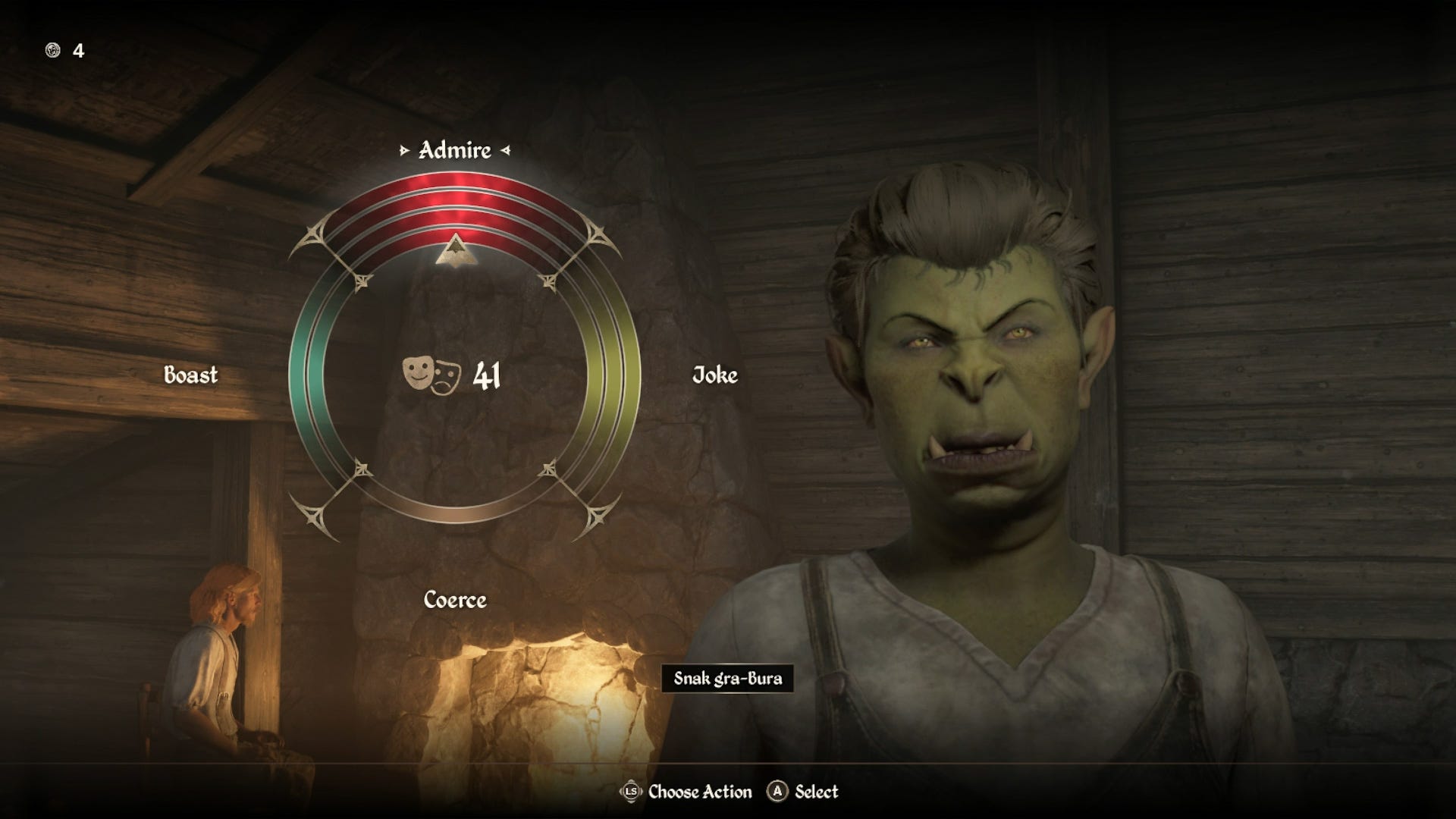
Overall: Oblivion and Skyrim are very similar games. Skyrim makes many small but important improvements that elevate it. But if you enjoyed Skyrim, you will enjoy and understand Oblivion.
Other Stuff
As I said: shadow-dropping after leaks riled up the community was incredible. I’m not going to lie, I teared up a little seeing the game6.
Player counts suggest the strategy worked. Can you imagine how insane it would be if GTA6 shadow-dropped - it would break the internet. More than anything, though this and Trump’s election confirm that earned media is worth far more in our fractured ecosystem than paid media. I get my content from authentic YouTubers and buying their genuine enthusiasm is impossible.
Oblivion has dominated gaming media and will probably get annoying soon. Still, Bethesda couldn’t have asked for a better outcome. I expect a tsunami of remakes now. If it’s as simple as dropping a game into Unreal, why wouldn’t you? Bethesda, I will personally pay you $60 for every single one. Skyrim with new graphics would be peak. Morrowind would need more work, but Fallout 3 — sharing the engine with Oblivion — is 100% happening7
But I just cannot shake the impression that Oblivion is much better than Starfield or frankly, most modern games. Playing it now honestly makes me wonder what the hell is going on in major studios. Have they been captured by toxic positivity or something? Avowed was almost comically bad compared to Oblivion - despite a team which was 2–3× larger.
Have we lost a social technology? Part of me wonders if this is an overreaction by Corpos to buggy games? Oblivion isn’t an indie game, it has that publisher shine, but it also is undeniably janky in a way no other modern game really is. Perhaps smoothness and creativity are competing values you have to trade off against each other?
But I can’t help but wonder if there is another factor at play… Specifically, gaming seems to be full of a lot more 50 and 60 year olds now than it was when Oblivion came out. In preparation to the release I rewatched The Making of Oblivion documentary and there were basically no old people in the entire video. Don’t get me wrong I have nothing against older people but life is really full of various stages, there is a reason not to take most 20 year old philosophers very seriously. Bjørk 2019 for example shows the research most Noble laureates win a prize for is done when they are in their mid 40s. Todd Howard is ~55 now which would have put him at ~41 when Skyrim released. I simply wonder if too many of the people making decisions in gaming are in their late 50s and too few are in their 30s. This is definitely true in academia and it is weighing down the entire profession.
The last silly thing I want to cover is the controversy around the option to choose your gender in the character creator. The remaster replaced gender with ‘body type 1’ and ‘body type 2’ - as has become the standard in gaming. This is always a little goofy because it just results in 99% of gamers clicking on both options to see which one is a “dude” and which one is a “girl”8, but this time it is even more silly because the game is littered with gendered language which is tied to the stereotypically fem and masc characters.
A couple of modders decided to make it possible for people to change it back to the original gendered options and Nexus - the biggest mod hoster - quickly took it down. This sparked a war between the Chud’s and the Troons which the Chuds seem to have won, Nexus conceded and has allowed the mods to return. It might sound minor but honestly a victory like this would have been incomprehensible in even 2024.
Conclusion
If you’ve made it this far, go buy the game. You will enjoy it!
This is what your federal dollars pay my stipend for
It is a shame how far Obsidian has fallen since New Vegas. Avowed seems to have some production hiccups, but I cannot think of a modern game that does what Oblivion does, which I prefer
If you really want to argue it is RDR2 or GTA5, I won’t fight you
"I think Scandinavian Paganism, to us here, is more interesting than any other. It is, for one thing, the latest; it continued in these regions of Europe till the eleventh century: eight hundred years ago the Norwegians were still worshippers of Odin. It is interesting also as the creed of our fathers; the men whose blood still runs in our veins, whom doubtless we still resemble in so many ways. Strange: they did believe that, while we believe so differently." — Hero as Divinity, Carlyle
Don’t even get me started on lockpicking
SOY BOY
A Fallout 3 remaster was “leaked” in SEC disclosures during Bethesda’s acquisition. It cannot come soon enough.
Perhaps it comes out positive in our Benthamite table of arithmetic, I’ll leave that to the experts.