My Contemporaries:
Archetypes from my Time and Place
Summary: The essay presents character sketches of eleven Zillenial-generation individuals across different socioeconomic backgrounds, geographic locations, and ideological positions. Through detailed personal narratives, the author illustrates the diversity of values, anxieties, and worldviews among contemporary peers, ranging from tech workers concerned with job automation to traditional working-class men, progressive professionals, and queer online communities. The collection reveals how class, geography, family background, and formative experiences shape political beliefs, social relationships, and personal aspirations.
Here is an incomplete set of some Zillenial Archetypes I’ve noticed in my life.
Jacob Williams
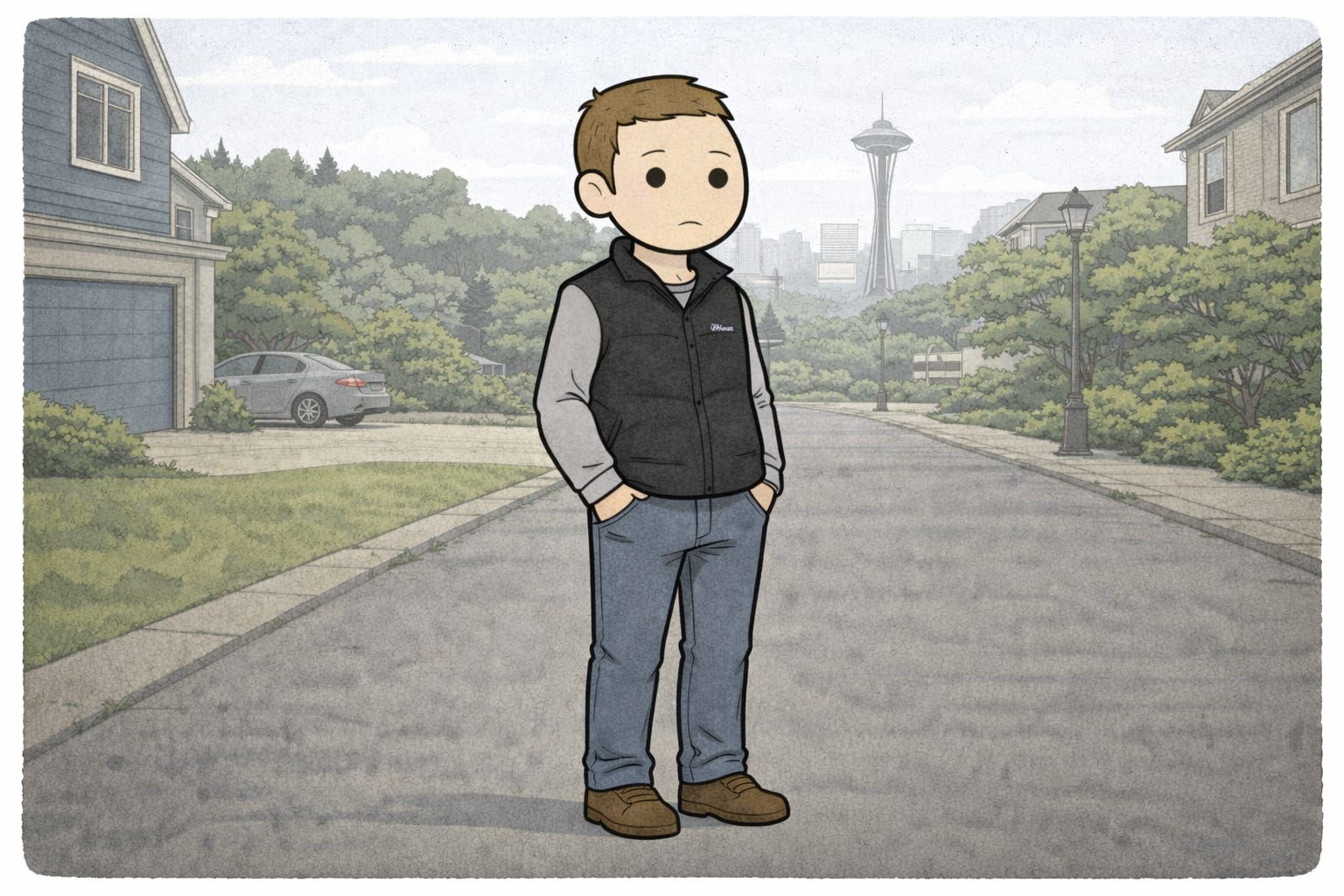
Jacob is an engineer at Boeing. He is thirty-four years old and recently married his college girlfriend Rebecca at a destination wedding in Costa Rica. They rent a two-bedroom apartment in a nice suburb of Seattle and have no intentions of having children yet. Jacob in particular is of the opinion that they definitely cannot afford kids until they can afford a home and pay off Rebecca’s student loans. He earns a hundred and forty thousand dollars a year and grew up in a suburb about thirty minutes northeast of where he lives now; his father was also an engineer.
Most of Jacob’s friends are scattered across the US, but he has a core group of “guys” who he met through his wife’s network and hangs out with regularly. In terms of hobbies, he plays the popular multiplayer games with his college friends, watches the popular shows with his wife, and complains about politics with his family.
He is a Democrat of the decidedly engineering neoliberal type. In other words, he supports immigration, is broadly supportive of technology — although increasingly worried about AI — and dislikes crime, particularly the homelessness situation in downtown Seattle. More than anything, he is motivated by a basal emotional hatred of Donald Trump, whom he sees as a unique threat to the cosmopolitan international civilization of which he is a productive member. Jacob carefully reads the MSM, or more honestly reads headlines from the MSM on Instagram and Reddit. He is broadly open-minded, but in the sense that he passively accepts the elite narrative root and stem without any qualms. He is, like all White men of his type, remarkably confident about topics which he has barely considered and extremely meticulous on topics which he knows well.
He is Christian — their wedding was a Christian wedding — but he only rarely goes to church. Both of his parents are the same type of mainline protestant, and the topic only comes up at grace. Jacob is defensive of Christianity as a part of the civilization which he loves, but he totally lacks any sincere belief in the religion, which he privately considers little more than iron age ritualism.
Perhaps most importantly of all, Jacob treats his life as a sequence of decisions to be optimized against, and holding optionality is the highest virtue. He values nothing more than cash, because it represents pure optionality. Even now, two years into the marriage, a part of him wonders if he made the right choice — not because Rebecca is a bad choice, but because marrying her closed the alternatives behind him. But the most important way this manifests is in a flowering of ideas and a dearth of execution.
Rebecca Williams
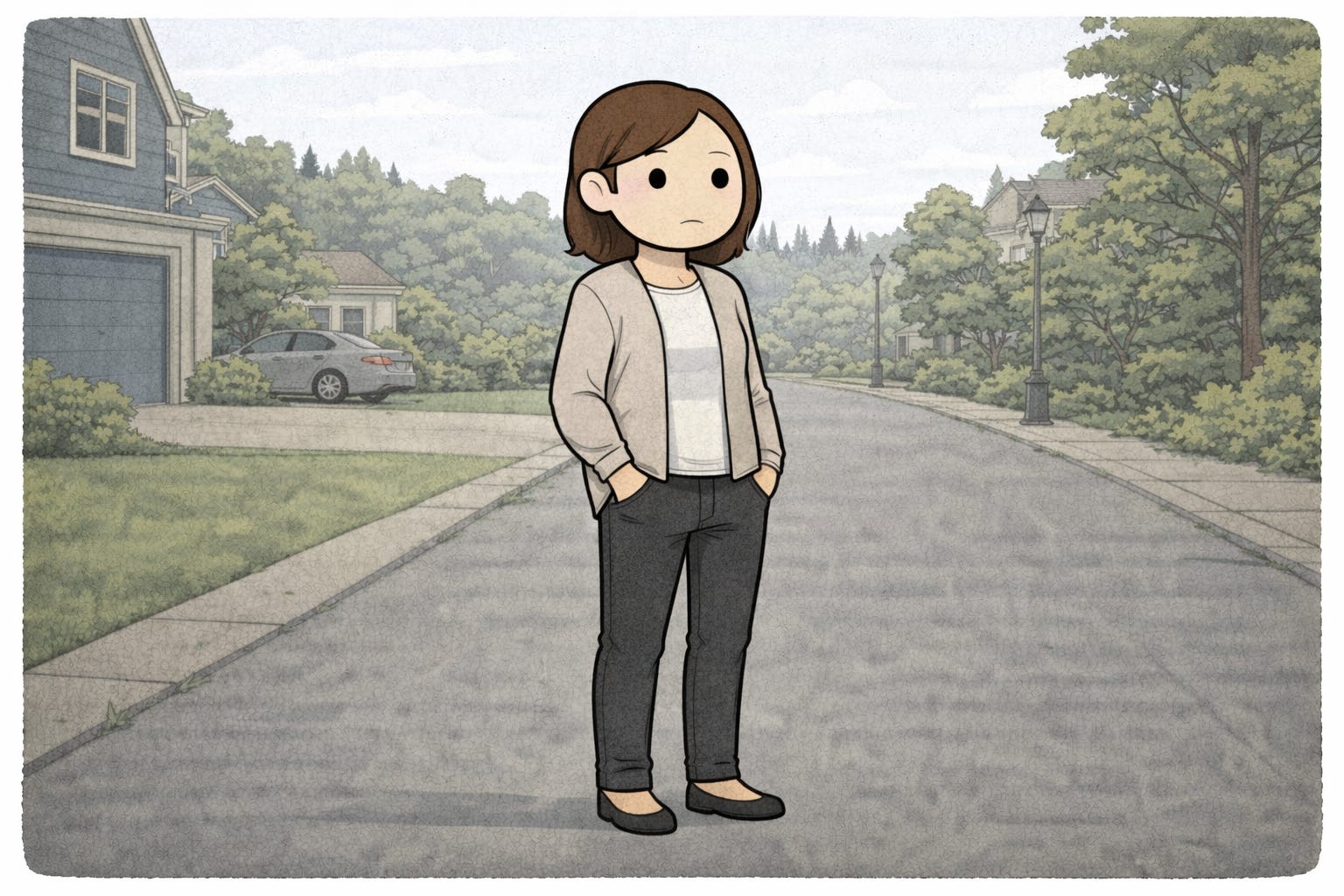
Rebecca is a thirty-two year old HR specialist at a large healthcare provider in the Seattle area. Just like Jacob she grew up in a suburb — in her case outside of Chicago. Her mom, who Rebecca is extremely close to and talks to nearly daily, is a nurse, and her father worked as a commodity trader. She earns seventy-two thousand dollars a year and has a master’s in Social Work from Seattle University. She and Jacob live in Mill Creek, and although they have not yet had children she wants them considerably more than he does, and is beginning to feel the timeline in a way she has not yet raised with him directly.
Rebecca has a shifting set of work+ friends with whom she regularly takes girls’ trips to other countries or cities in the US, which she posts about heavily. She is also part of a book club that reads a mix of high literary fiction and female romance slop. Outside of this, her primary hobbies are running, watching TV, and consuming politically coded “Girls and Gays” social media, primarily through TikTok.
She is a Democrat for moral reasons, most saliently racism and abortion, but honestly because she is deeply morally repulsed by Rightwingers. Her politics and personality are a typical fusion of a high level of personal social conservatism for herself and her immediate social group — no one in her circle would even consider having a child out of wedlock, or consuming hard drugs — and an enormous permissiveness toward people outside of that circle, who she implicitly views, although she would never admit it and would be horrified to hear it described this way, as her social, biological, and spiritual inferiors, and so requiring a different and lower standard of behavior. The contradiction between her own near-perfect social conservatism and her revulsion at conservatives is not visible to her.
Rebecca is a sincere Christian and attends a mainline Protestant church at least once a month, almost always without Jacob. She prays often and reads the Bible regularly, which is a frequent topic of conversation with her mother. Her religious belief is a deep motivating influence on her politics, in particular the emphasis on addressing, or at least witnessing, suffering. Of course this suffering mostly exists in faraway places among foreign people, because her own environment is quasi-utopic. Her care for these distant sufferers is genuine, and her desire to be a good person is the most important fact about her.
A side effect of this focus on distant suffering is that she lives in a continuous low-grade state of fear about serial killers, child abductors, drink-spiking, and men in parking garages, and she regards parents who let their children attend sleepovers — where they might be raped — let alone walk to the park alone, as reckless to the point of abuse. A separate effect is that she has very little context for navigating social conflict outside of her highly educated bubble. When frustrated by her “inferiors” she is quick to escalate, almost always through online complaint systems or formal channels rather than direct confrontation.
Kevin Wilson
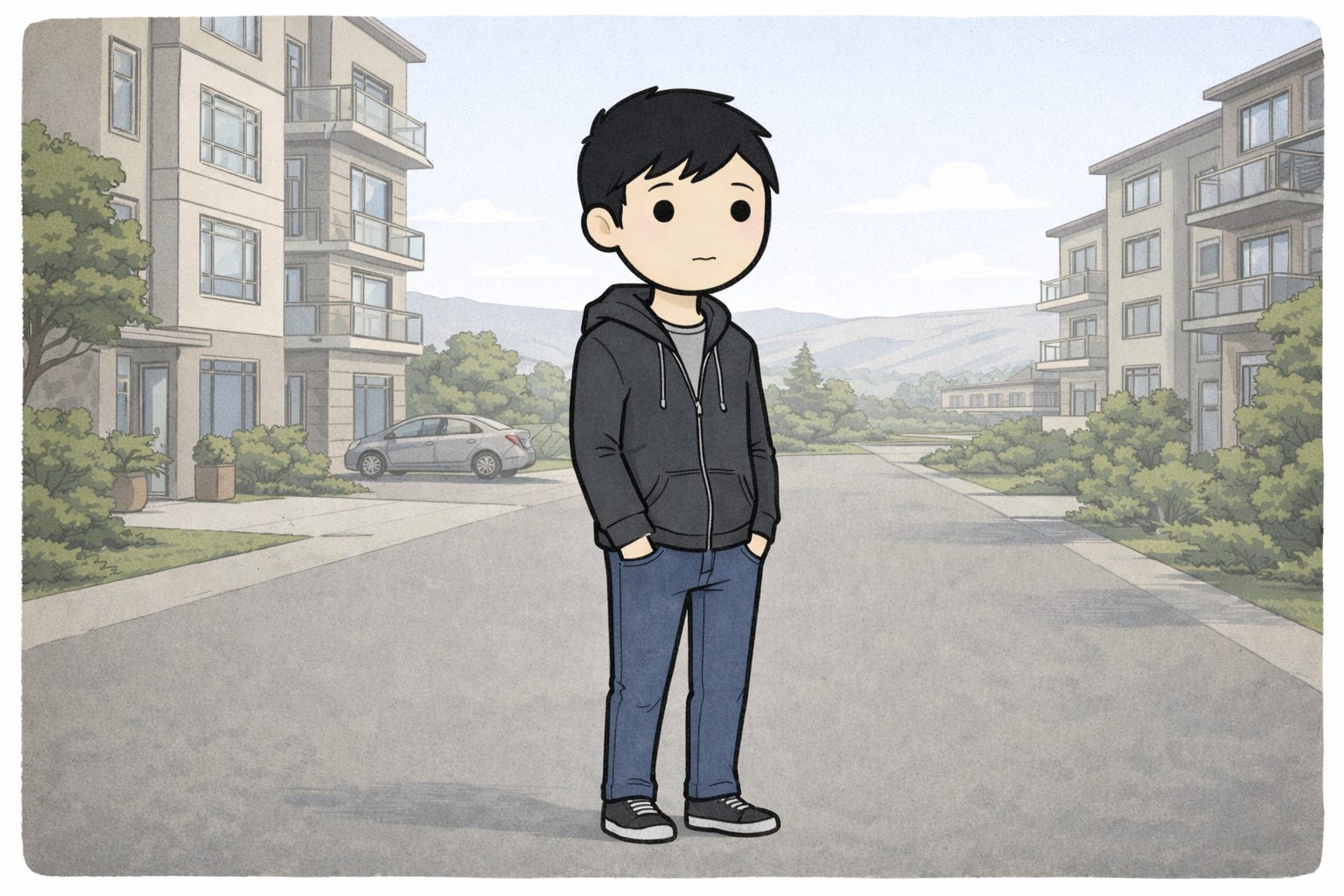
Kevin is a software engineer at Google, twenty-eight years old, half-Japanese on his mother’s side and half-White on his father’s. He grew up in a South Bay suburb just outside of San Jose and now lives in a four-bedroom apartment in San Mateo with three roommates, two co-workers and a friend of a friend. He earns roughly four hundred and eighty thousand dollars a year in total compensation, the majority of it in, as of yet, unvested stock. His current net worth is about five million dollars on paper, half of which came from a startup related to NFTs that he solo founded in college and exited during COVID.
Kevin was not the only Wasian in his community, but nevertheless he existed in a semi-liminal space between the Asian students at his school and the Anglos. His father is a regional sales manager for an industrial supply company, and his mother was a homemaker. He sees neither of them much outside of Christmas. One of the principal regrets in life was the choice to attend Tufts over Georgia Tech at the insistence of his mother, since he never managed to fit into the New England preppy, downwardly social atmosphere. Although he succeed at school Kevin was never able to form a long term romantic relationship and this weights heavily on him.
He is extremely good at his job and has managed to automate the vast majority of it using Claude Code at this point. He attends meetings on mute and has not had a substantive technical conversation with a coworker in months. He is not alone in this behavior and a wide swath of his coworkers are in a similar boat. Google doesn’t seem to care, or notice—a fact that fills him with legitimate anxiety—but there is nothing he can do about it. His principal concern at this point is keeping his job until the AI singularity he is convinced is on the horizon.
Insofar as he has a social life, it exists entirely online, in particular in two Discord servers where he is a funny, well-liked member of the community, even serving as a moderator on one of them. He is particularly involved in the Fandom for “The Boys” franchise and spends a significant part of his personal time updating the shows wiki and trying to hunt down clues about upcoming episodes.
Beyond this he plays video games, watches anime, and lifts weights inconsistently. Kevin is also addicted to Asian pornography and has been consistently since thirteen. Finally, he follows three or four YouTubers with a tenderness normally reserved for a relative or a loved one.
Marcus Pritchard
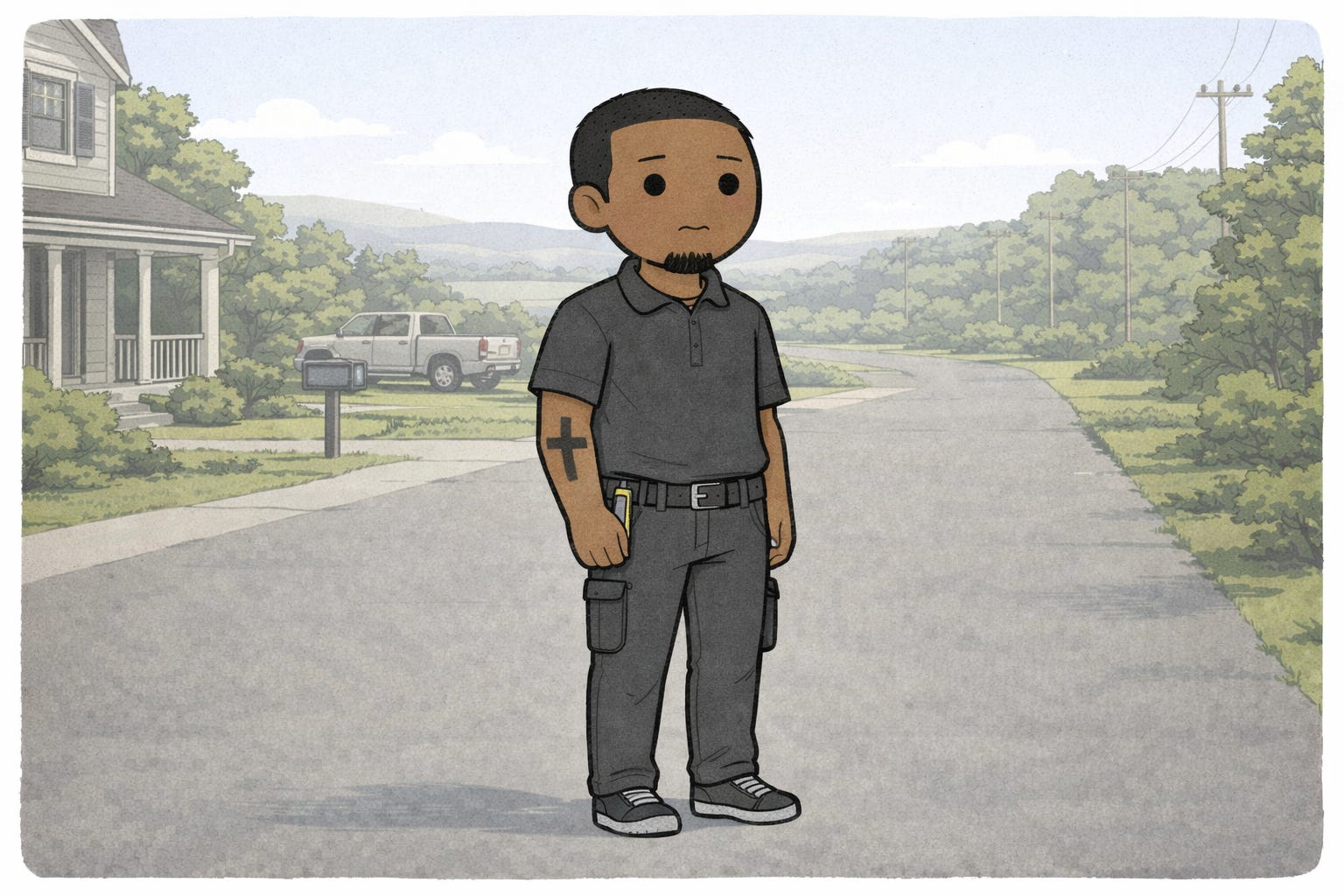
Marcus is a gym equipment repair technician for a regional service company that contracts with commercial gyms, physical therapy clinics, and corporate fitness centers across eastern Pennsylvania and South Jersey. He is twenty-seven and earns sixty-eight thousand dollars a year. He grew up in West Philadelphia and was the first member of his family to go to college. Marcus attended West Chester for three years and left without finishing for a combination of academic and financial reasons but he still carries eight thousand dollars in student loans from that time.
He lives in a rented townhouse in Norristown with his girlfriend of three years, a Salvadoran medical assistant named Vanessa. His mother is a retired nurse’s aide who still lives in the house Marcus grew up in with his father who is a city clerk. His parents were obsessed, throughout his childhood, with Marcus not slipping down the social ladder and view him as a moderate success.
Marcus’s closest friends are five guys he plays Magic: The Gathering with, whom he met at a local game store. The group is composed of a White high school chemistry teacher, an Indian guy in IT, two other White guys, and a Puerto Rican who works at the game store where they all met. They play Commander on Thursdays, drive to a regional tournament once or twice a year, and maintain a group chat that is mostly memes and gossip about other people in the scene.
Politically he is disengaged at the meta level—the only election he has ever voted in was 2020, for Biden—but on every issue other than race he is substantially to the right of his friend group. He watches both Hasan Piker and Asmongold, follows the NBA, smokes weed regularly as his primary social drug, and was raised Baptist. He has have a large cross tattooed on one arm from a brief online religious phase shortly after leaving college, but is otherwise agnostic.
His relationship to race is the defining private fact of his life. Marcus is hyper-defensive about being condescended to and quick to escalate situations, often physically, that he reads that way. At the same time he is quietly embarrassed by large parts of contemporary Black culture, which he has spent his entire life moving away from, semi unconsciously, and rarely hangs out with other Black people.
Owen Nowak
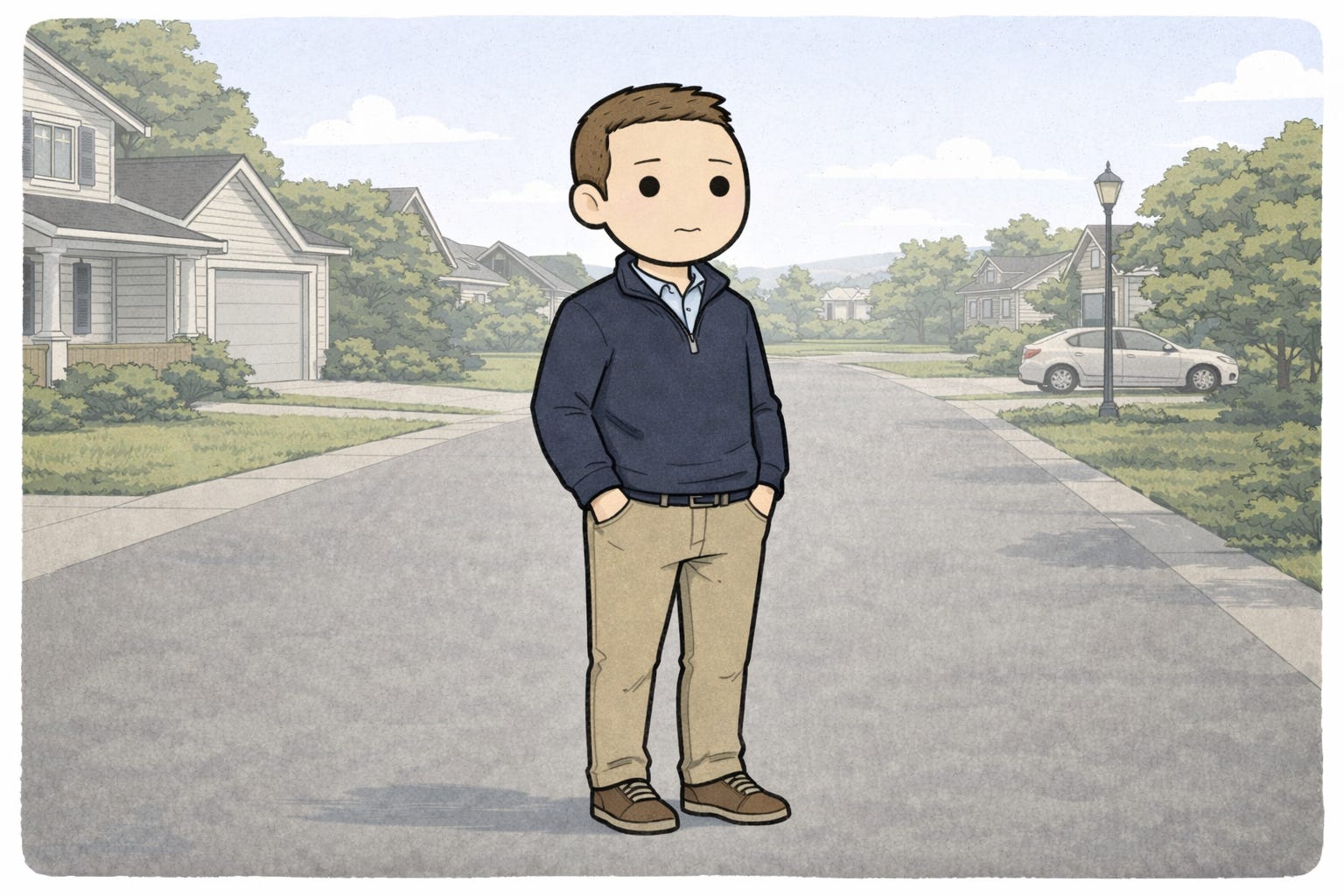
Owen is a commercial insurance sales associate at Broderick and Sons, a mid-sized regional brokerage in Grand Rapids, where he grew up. He is twenty-seven years old, earns seventy-eight thousand dollars in base salary with commission that brings his total to around ninety-five in a good year, and owns a fourteen-hundred-square-foot postwar house in a working-middle-class neighborhood on the southeast side of the city, which he bought in 2021 with help from his parents on the down payment. He is married to Maria, a kindergarten teacher, who is currently pregnant with their second child, their first is a two year old boy. His father was of Polish extraction and worked in logistics before passing away at fifty-six, and his mother is Cuban American.
He attends Mass every Sunday, goes to confession two or three times a year, and genuinely and unquestionably believes in the creed of his fathers. His core friend group is four guys from high school who all stayed in the Grand Rapids area. They enjoy hunting and watching football together at Buffalo Wild Wings on Sunday. Their principal claim to fame is that they have maintained a Snapchat group chat continuously since high school and have over a decade of saved messages and memes, to the point of unusability. Once they tried shifting to WhatsApp but it just didn’t hit the same.
Owen went to a mid-sized state university in Michigan between 2017 and 2021, during the height of the Awokening, and was completely transformed by the experience. The combination of sanctioned lecturing obviously directed at “white” guys like him, and the later large marching groups of students — one of which shouted at him and threw something at him while he was walking to class — was deeply traumatic. In 2018 a member of his fraternity was accused of rape by a girl at the school and dragged in front of a Title IX panel where he was subjected to a Kafkaesque process and denied the right to either know the exact nature of the accusation or have access to counsel. He was expelled from the school, and the fraternity was protested on two occasions, including once being significantly graffitied. Later he heard the girl admitted to her friends that she had invented the accusation.
As a result, Owen trusts nothing that comes from any organization that attempts to downplay these experiences, for simple Bayesian reasons — they were real and significant to him. He studiously avoids the MSM and almost exclusively consumes his news through memes on Instagram. The only time he watches television news is Fox at his mom’s on Saturday for dinner. He voted Trump in 2016 as his first election, having just turned eighteen, because he thought the guy was funny and did not seriously think he could win. In 2020 he begrudgingly voted for Biden because he wanted Covid to be over and thought Biden would accomplish that. Then in 2024 he voted for Trump as a way to bring fire and sword to the wokes. Owen took genuine glee, a fact he shares openly with his friends, in the ICE deportations and the DOGE saga, and has soured on Trump as the administration has shifted from domestic policy to Israeli-oriented adventurism. The one major exception to Owen’s general conservatism is that he is a heavy weed smoker and often will his dab pen at work, secretly because Maria does not approve.
At his core, Owen is a plebeian in the most visceral sense. He does not engage with the federal government outside of paying taxes, because he has no access to social welfare, his local community is well-maintained and safe, and he works for his living. But he is not a member of the patrician class, and he is keenly aware of this fact, and deeply resentful that they used their social superiority in the late 2010s to remind him of it.
Maria Nowak
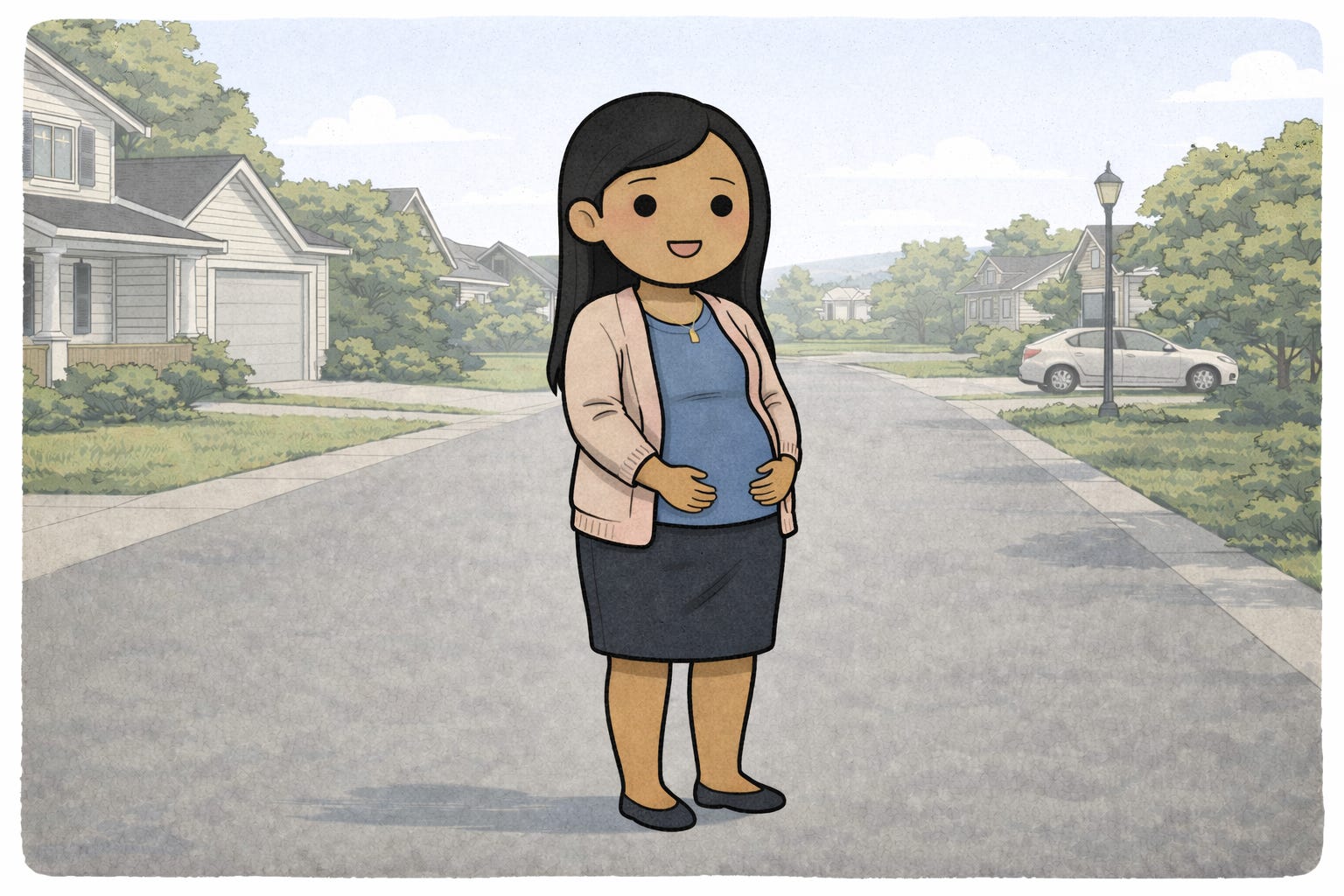
Maria is a kindergarten teacher at a public elementary school in the Grand Rapids area. She is twenty-six years old, has been teaching at the same school since graduation, and earns forty-six thousand dollars a year. She is married to Owen and is five months pregnant with their second child, a boy. Her parents immigrated from the Philippines in the early nineties—from Cebu, where her father had trained as a medical technologist. Although Maria was born in the United States she still mostly speaks a hybrid version of English and Tagalog with her family, much to Owen’s frustration. She has a large extended family across the Midwest and one sister.
She attended the same school as Owen, where they met at a Catholic student group during her sophomore year. She is sincerely, painfully, and deeply Catholic and has a devotion to the Santo Niño and to Our Lady of Perpetual Help. She attends Mass every Sunday, often goes again after work during the week, and prays every night. She believes in the literal existence of angels and demons, both of which she sees as actively at work in the world, and she watched her aunt be miraculously healed by a faith healer in Pampanga in 2009. A story she loves to tell, often reenacting it.
Maria, and her whole family, votes Republican exclusively over abortion. Literally nothing else matters to her politically because she cannot abide the murder of millions of innocent babies and their associated damnation, in particular when so many families are looking to adopt. Beyond abortion she is almost entirely unaware of ordinary politics and picks up what little she knows through osmosis from her life and her social media feed.
Underneath everything sits a dense folk cosmology that she has picked up, mostly from instagram, that there exists a broad and demonic Jewish conspiracy at work in the world, of which abortion is the most maleficent expression. None of this should be confused with personal animosity toward Jewish people, toward whom she feels exactly zero hostility in her actual life.
She cooks a horrifying concoction of Midwestern and Islander slop and it is rapidly showing on her frame. Her friend group is primarily through the church and her family, where she has a stable and tightly knit group of women to whom she confides everything and to whom she turns for advice on important and unimportant decisions alike.
She is an excellent teacher, and her classroom is orderly and rigorous. She will take the full twelve weeks of maternity leave and would love to become a stay at home mom if she and Owen could afford it, which they cannot.
Daniel Pena
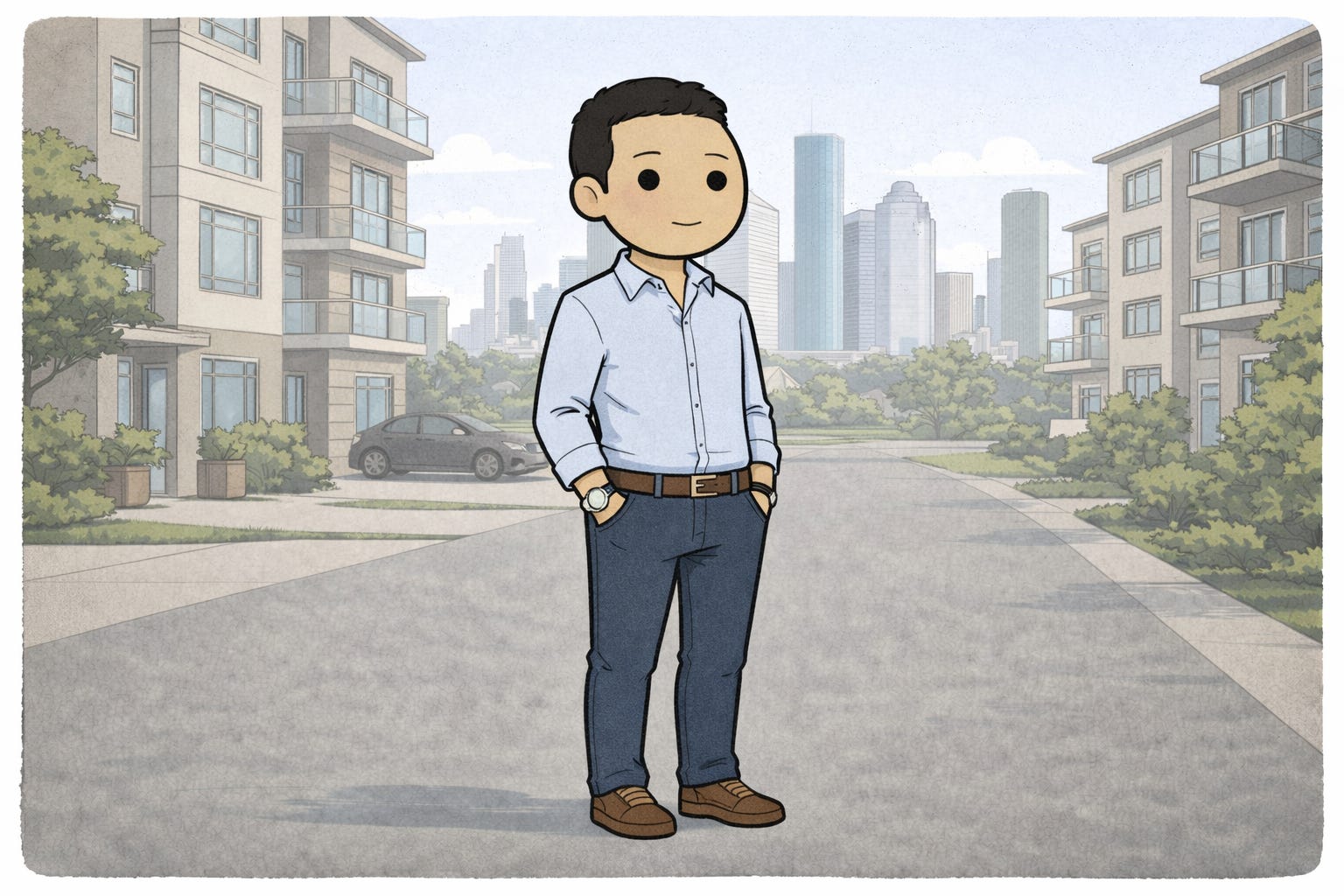
Daniel is a senior audit associate at Deloitte’s Houston office, thirty-two years old and two years from making manager. He earns ninety-five thousand dollars a year with a bonus that brings him to roughly a hundred and ten. The work is boring but he is good at it. He lives in a one-bedroom in a new Midtown mid-rise, leases an Audi A4, eats out every night, and has about eighteen thousand dollars in his 401k but otherwise little in savings.
His grandparents left the Dominican Republic in the early fifties and settled in Miami, where they ran a small lunch counter in Hialeah for forty years. His father was the middle of their three children, enlisted in the Air Force out of high school, was commissioned in his twenties, and retired as a lieutenant colonel. His mother is a White non-Hispanic nurse from Ohio whom his father met at a base in Germany. Daniel grew up on Air Force bases — Ramstein, San Antonio, Colorado Springs, Tampa — and so he does not have a hometown. He went to the University of Florida on in-state tuition, majored in accounting, and was recruited into Deloitte at the career fair his junior year through a Hispanic recruitment pipeline.
Daniel’s closest friends in Houston are two other Deloitte guys, one White and one Indian, and a college roommate. The group of guys go out three or four nights a week—rooftop bars in Midtown, clubs on Washington Avenue. He is good-looking, well-dressed, and has an attractive level of racial ambiguity while still coding as White. He has been in two semi-serious relationships since college, both of which he ended because of pressure from the girls for it to become more serious.
Politically he is lightly conservative in the Houston professional register—likes low taxes, finds the cultural left annoying, and voted Trump in 2024 but has since soured on him. But fundamentally, Daniel has no true ideology or dogma.
Lilith Aldridge
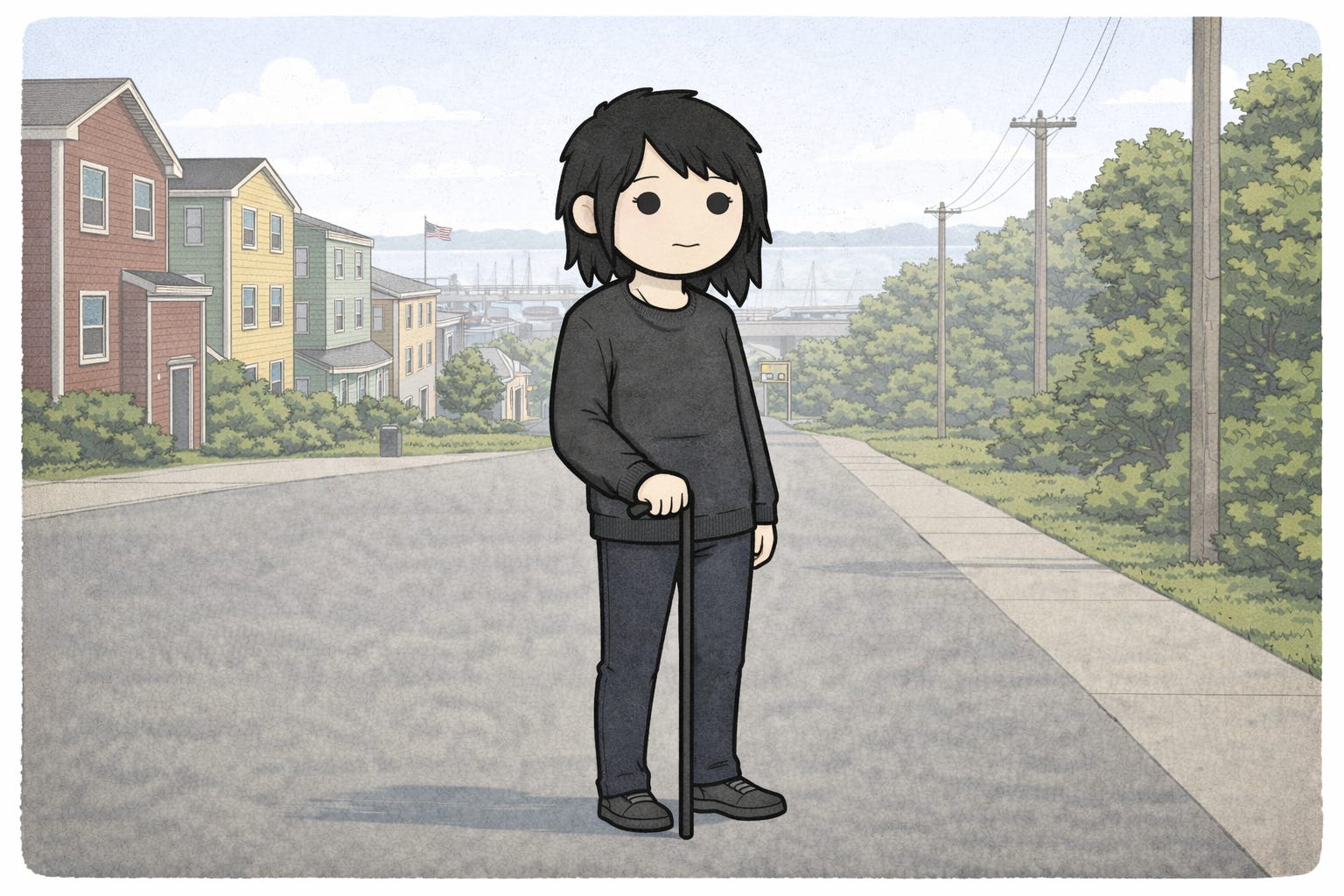
Lilith is twenty-nine years old and works as a senior security engineer at a mid-sized cybersecurity company, fully remote, earning seventy six thousand dollars a year. She lives in a five-bedroom house in Portland, Maine with four other people who are all queer or trans or both, in an arrangement that is part hostile, part sexual, and part familial. She is a trans woman, who goes by She/They pronouns and has been on hormones for three and a half years but has no intention of getting surgery.
She grew up in a small city in eastern Washington as the older of two children of middle-class Republican parents. She was a smart, isolated, badly bullied kid who found 4chan and adjacent spaces around the age of fourteen and spent the next seven years deeply embedded in them. During this period she became actively racist and played an enormous amount of HOI4 with people online. During Covid she gradually lost faith in the right and became increasingly left instead before ultimately transitioning herself.
Her current politics are far-left in the specifically Very Online register—anti-imperialist, deeply invested in Palestine, and hostile to liberals far more often than to conservatives. She posts constantly across Bluesky and two Discord servers. She has been diagnosed in adulthood with autism and an anxiety disorder, and has a chronic pain condition with an ambiguous etiology that she has integrated into her self-understanding and which often forces her to use a cane.
Lilith’s parents are still in eastern Washington and she visits for Christmas every other year. They use her name and get her pronouns right about seventy percent of the time, which she has decided is enough to maintain the relationship but otherwise they speak very little. She has no friends outside the network of online and in-person queer / political communities that she joined during the transition.
Samantha Roth
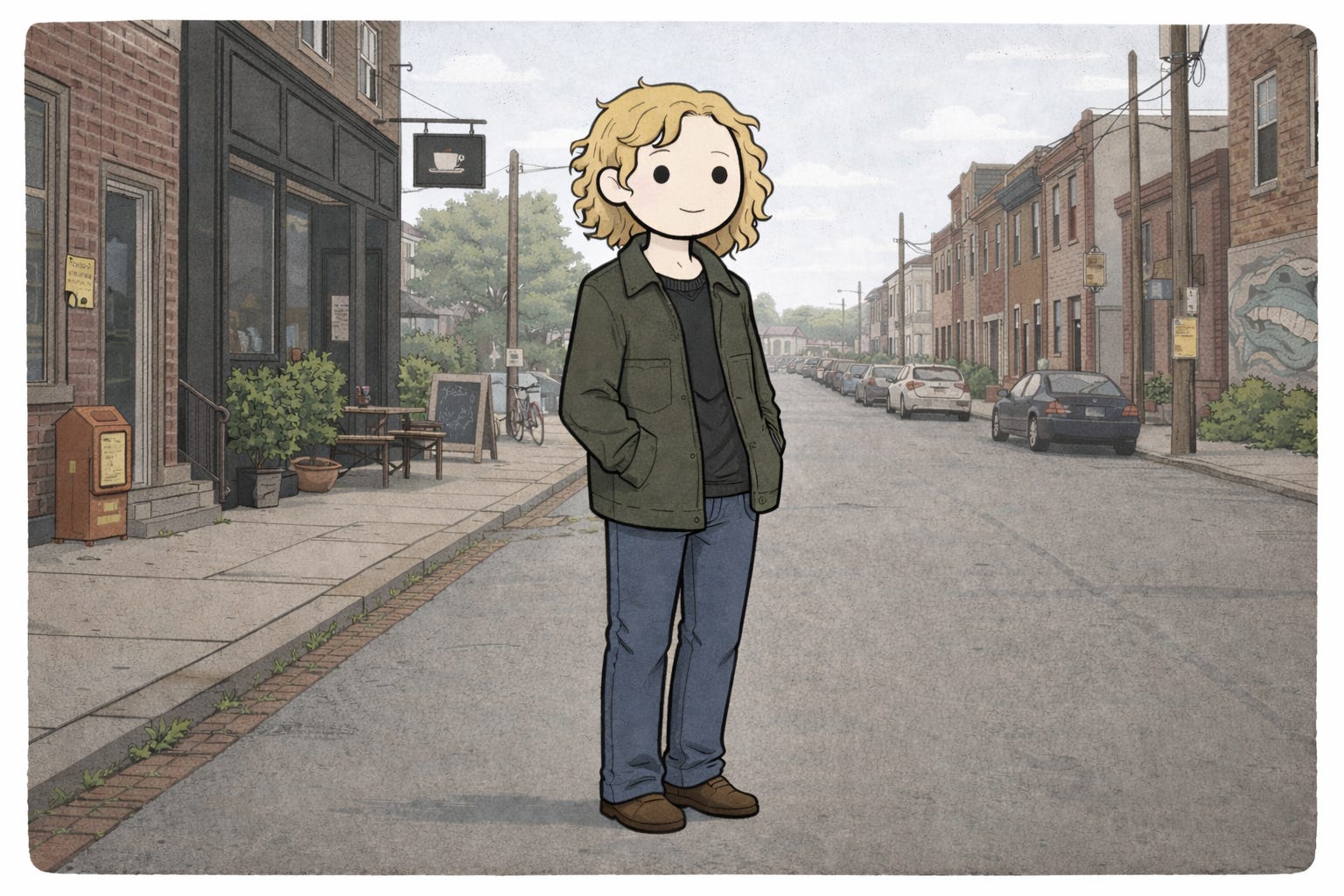
Sam is twenty-six years old and works as a barista at a third-wave coffee shop in Fishtown. She has been there about a year and a half and earns roughly thirty thousand dollars before tips. She lives in a two-bedroom in Fishtown with a friend from college and covers her share of the rent with her parents money. In addition to this they pay for her health insurance, her phone, her therapy, her flights home, and often pay down her cc. She has no debt, no savings to speak of.
She grew up in Scarsdale and her father is a partner at a midsize entertainment law firm in Manhattan and her mother runs a small foundation that gives grants to arts education programs in the city. Her younger brother is a junior at Yale and is going to law school and her maternal grandmother lives in a rent-stabilized two-bedroom on the Upper West Side that the family has held for sixty years and is the person Sam is closest to in the world. Sam went to Amherst, majored in English and spent a semester in Edinburgh.
She is sincerely, casually, and comprehensively Jewish in the specific register of fourth- and fifth-generation American Reform Jews of the professional class. She went to Israel on Birthright at twenty and has not been back, and her relationship to it has gotten more complicated in recent years. Politically she come from a long line of Jewish progressivism and is DSA-adjacent in a way that does not require her to organize, attend meetings, or really do anything. She is a brilliant artist and some videos she has made of herself painting have been going semi-viral on social media recently.
She has a close group of five women from Amherst who she travels to see regularly and is plugged into the alt art scene in her community. She reads contemporary literary fiction by women, has a Substack with two thousand subscribers, has been in therapy since she was fifteen.
Tiffany Park

Tiffany is a thirty-one year old working in advertising in Chicago. She earns forty-eight thousand dollars a year and works roughly twenty hours a week. She went to Duke for undergrad and studied psychology before getting a job at McKinsey in the city. Tiffany worked there for two years before quitting and taking a less stressful job.
She grew up in Burke, Virginia, the daughter of Korean immigrants. Her father is a pediatrician who now lives in Arizona and her mother has a master’s in IT and works for a company in Tysons Corner. They divorced shortly after Tiffany left for Duke and no longer talk to each other. She has one younger brother who is at Virginia Tech for a Master in CS.
Her boyfriend is forty-two years old, has no children, has never been married, and does not really work. His family owns a series of warehouses across the country and his role in the business is nominal but highly compensated. He is good-looking in the soft way that people with soft lives are and they have been together for five years and he is pressuring her to get a boob job.
The main way she self expresses is through Instagram where she posts to her thirty-eight thousand followers and climbing. Trips to Tulum, Lake Como, Aspen, Tokyo, the south of France—all funded by the boyfriend. She lives alone in a one-bedroom in a luxury high-rise in River North that costs thirty-eight hundred a month, again funded by her boyfriend.
Her friend group is split in two. First, is a group of girls she has met in the city and second is a core set from Duke. She does Pilates, takes French lessons online, plays tennis once a week, and watches Real Housewives and Love Is Blind. She is not religious or political in anyway and doesn’t pretend to care.
Jeremy Richards
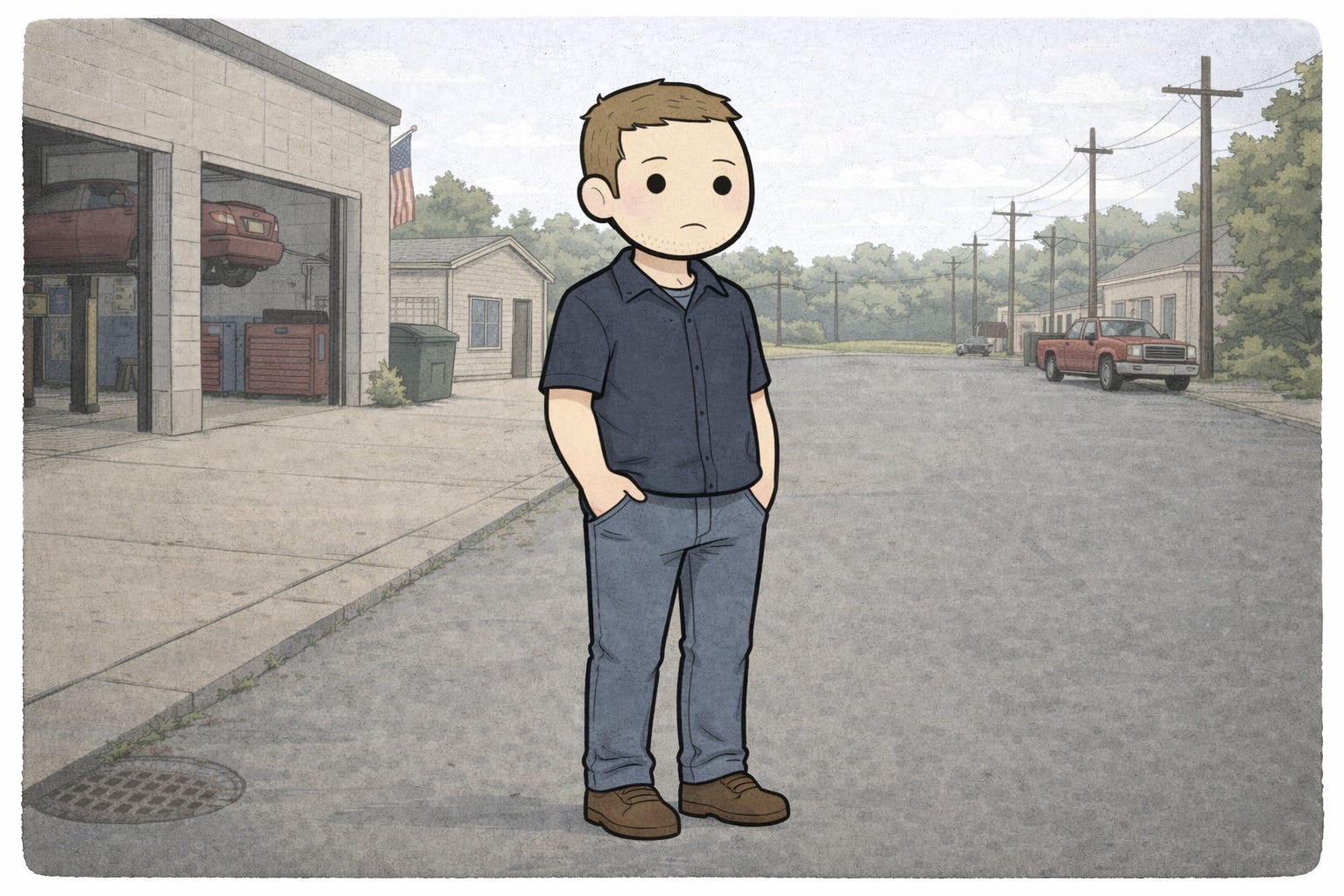
Jeremy is twenty-nine years old and works as a mechanic at a two-bay garage in Wilson, North Carolina. He earns about fifty-four thousand dollars a year on the books and another six to ten thousand in side cash from Facebook Marketplace flips and friend-of-a-friend jobs. He works Monday through Friday, seven to four, with the occasional Saturday. He graduated from his local high school and never went to college, although he did do one semester at Pitt Community College.
He has two children. His daughter is ten years old, lives with her mother Daniela, and is the product of a ten-month relationship Jeremy had with a Honduran-American girl when he was nineteen. He sees the daughter on alternating weekends and some holidays and pays child support inconsistently. His second child—a son—is from his wife, who is a stay at home mom, and is four.
Jeremy drives a 2024 Chevy Silverado that he spends most of his free time working on and he is part of a “Truck Club” of guys in his area who meet up on Sunday. In addition to this his closest friends are four guys he went to high school with, all still in the area, who drink at the same two bars, hunt deer together every November, fish in the spring, and watch college football together every Saturday in the fall.
He votes Republican in every election because they are the White man’s party and knows very little about politics beyond a visceral disgust for leftism and a broad feeling of being talked down to. Covid barely touched his life at all and he remains unvaccinated. Jeremy is Christian in the broad sense and has a picture of Christ in his house although he only rarely goes to church.
His world runs almost entirely on the older layer of the American welfare state, meaning programs like Social Security, rather than Great Society programs. The newer layer basically doesn’t apply to him—TANF, Section 8, WIC.