Just be Human
You can be nothing else.
Summary: The essay argues that logic and abstract reasoning are overrated tools for determining morality, and that instead individuals should embrace their own subjective moral experiences and intuitions. Drawing on Nietzschean philosophy, the author contends that there is no universal moral truth; rather, each person inhabits their own moral universe shaped by their evolutionary design and lived experience. The core obligation of humanity is simply to be human—to pursue authentically what one is designed to do—rather than to conform to rationalist systems.
One of my genuinely favorite writers on Substack is an extremely bright young man named Bentham’s Bulldog (BB), who writes with an impressive and frankly astounding speed while maintaining a remarkable consistency. If you aren’t subscribed to him yet, I would suggest you do so—if for no other reason than he is a leading indicator of what Substack will talk about in the future.
His name may have already given it away, but BB is a devout utilitarian, and much of his most popular writing has taken the form of pushing the logical conclusions of that creed to their absolute limit. The shrimp debate was just the spear point of an entire catalog of work. Now, it is frankly a little hard to tell how seriously he takes his own ideas. It is possible he lives like a Jain—wearing a screen to make sure he does not inhale any insects—but if nothing else, as another young man trying to succeed at writing, I cannot help but give him credit for pushing his moral views and trying to make the world a better place.
One of his schticks is an insistence that nature is Evil1. The logic for this isn’t particularly complicated. I’ll let him present the argument himself.
if pain matters because it hurts, then wild animal suffering is worth taking seriously because there’s just so much of it! If every deer, pigeon, fish, and shrimp that cries out in pain as it’s eaten alive is a genuine tragedy, then the fact that this biological death machine consigns numbers of animals too great to fathom to an early grave is quite serious.
The Worst Thing In The World Isn't What You'd Expect — Bentham's Newsletter
I’ve already written an article where I discussed why I am not a utilitarian (it amounts to questioning why pain and pleasure exist to begin with), so I’m not going to debate BB’s thesis. I concede if you were a utilitarian, you should want to turn every animal into a pet. I am not a utilitarian, however, so I find that proposal to be a disgusting offense to the Edifice of Nature—but what is a little disagreement between friends!
Instead, I want to talk about my conception of morality and purpose more generally. Because BB’s arguments against nature have made me consider my own thoughts more deeply and ponder what I actually positively believe about life.
To summarize it here: I think that logic is substantially overrated, and we have a single obligation as Humans—to be Human.
I’ll start with my problem with Logic (capital L):
I have never taken a formal philosophy class2. Still, I’ve had enough exposure to analytical proofs in my PhD courses to get a feeling for the fatal flaw inherent in any logical system. Specifically, that Logic is a tool and not an end. We develop axiomatic systems to fit reality; reality does not fit our axiomatic systems. If the world were forced to comply with the most consistent, simple representation, we would be living in a world of Newtonian physics. Unfortunately for the rationalists, we do not. If God did not play dice with the Universe, perhaps we might even be able to reconcile our physical laws. As of yet, they appear to remain decidedly unreconcilable, and God appears to gamble with reckless abandon.
So if we cannot rely on pure Reason, what must we do instead? Well, I believe we must live in the delicate interplay of our systems and reality. In the case of physics, this is easy because we can simply point to the actual, literal, world. For example, the world appears to be intuitively very flat, perhaps even concave in many places, but the intuitive extension of this observation—that the world is indeed flat or concave—is literally untrue, and we should abandon this axiom for the less intuitively obvious one that the world is indeed a sphere3.
Therefore, just as physical phenomena determine which model of our universe is most true—not the appeal of a system’s axioms—our individual Romantic experiences of life determine what is morally true. Ultimately, this is what a utilitarian believes also, since they attach moral weight to our suffering and pleasure, which are a subjective experience and not something that exists outside of our mind.
Experience, unlike physics, doesn’t have one stable reality, which means we are required to believe, then, in a multiplicity of Truth (capital T) w.r.t. Human morality. There is, for each individual person, a moral truth that feels deeply True, and they should pursue it! For BB, that means advocating for the welfare of insects; for me, it does not. That isn’t because BB is “wrong” but just that we don’t inhabit the same moral universe. In On the Genealogy of Morals, Essay I, Section 13, Friedrich Nietzsche gives a powerful example as part of his discussion on the origin of the “good”:
That lambs are annoyed at the great predatory birds is not a strange thing, and it provides no reason for holding anything against these large birds of prey, because they snatch away small lambs. And if the lambs say among themselves, “These predatory birds are evil—and whoever is least like a predatory bird—and especially who is like its opposite, a lamb—shouldn't that animal be good?” there is nothing to find fault with in this setting up of an ideal, except for the fact that the birds of prey might look down with a little mockery and perhaps say to themselves, “We are not at all annoyed with these good lambs—we even love them. Nothing is tastier than a tender lamb.”
Let me repeat myself to be extremely clear: there is no such thing as a morality which is a priori to individual experience. Humanity is the only possible judge of Human morality, just as birds of prey are the only judge of their own morality, and not lambs.
That there are more lambs than eagles does not make the eagle a demon. It is, of course, rational that each would feel as they do because beliefs do not come from the aether. No, they are, much as some might be loath to admit it, the result of this brutal Darwinian world of selection we all live in. Which means our moral systems will always, in the limit, reflect those beliefs that help us survive and propagate. Lambs who whispered amongst themselves “these birds are very beautiful; I cannot wait to die to feed their young” would achieve their nirvana in no time but leave the world only to the ones who shook their heads in somber disagreement. It wasn’t debate that ended the Shakers, but their refusal to have children. We all die eventually.
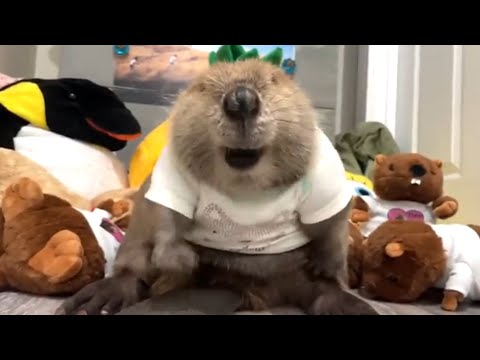
Thus, the most moral thing you can do in any given moment is the thing that YOU truly and really want. I’m not advocating for egoism—at least not for myself—because Humans are not egotistical or anarchist animals (at least not like Max Stirner or other esoteric German philosophers might define it). No, we are deeply social creatures who crave organization and hierarchy. We will do it organically from the youngest age, in the most primitive settings, and among the post-material elite, just as beavers will seek to dam a hallway with stuffed animals. It is what we are, and so it is, to us, moral.
There is real tension today between our various needs. We are all poorly optimized for this industrial society, and only time, with its relentless avalanche of generations, will mold the Human soul to this new life. Our search for both objective, abstract meaning and our embrace of nihilism both reflect this fact, and I have no answer other than to say that we have no way of knowing who is the most fit a priori. If you wish to die because the environment has changed, that is your prerogative!
As I see it, there is no shame in your humanity, and you should want to be nothing more than yourself. Love life, love fate, love the lot that you are given, because you will be given no others, and this short spark, sandwiched between twin eternities of silence—in its wondrous beauty—is all the serving of existence you will ever get.
I’ll end this essay here: I’ve found profound meaning in asking myself the following question: “What was I designed to do at this stage?” and then trying my damndest to do it.
The requirements of existence will always exist exterior to your internal desires. Long after our ancestors were forced down from the trees due to drought, their bodies were still not designed to run, but nevertheless, they ran. Learn to live within the contradiction—there is no alternative.
Please consider becoming a paid subscriber. For $5/month or $50/year, you'll gain access to all my paywalled articles and earn a permanent spot in my heart.
A front in the larger war against Christmas
For example, what the hell is the big deal with the difference between Is and Ought? It seems to consume a lot of discussion for something that, to me, seems pretty simple.