How to not go insane writing on Substack
Or why I block and mute with reckless abandon
Summary: The essay outlines a strategy for maintaining mental health on Substack through selective muting and blocking of negative users. Banks categorizes Substack users into seven types (normal, stupid, trolls, retarded, evil, tiresome, and amazing) and applies different filtering strategies to each. He argues that using Bayesian reasoning to identify problematic commenters, combined with aggressive filtering, transforms the platform experience by elevating good-faith interactions while minimizing toxicity. The core principle is that no one has a right to one's attention, and cultivating one's community is more effective than trying to reform bad actors.
I have had quite a positive experience on Substack, and generally deal with very little negativity. In fact, I would go so far as to say I’ve made quite a few real friends on this platform and have actually been building a community of Substackers through New Western—check out our announcement article!
A big reason I haven’t gone insane, yet, is I pursue an aggressive mute/block policy, and I wanted to talk a little bit about both why I do this and explain how I determine who to silence.
However, if you want access to these secrets, you are going to have to fork over some cash in the form of a paid subscription!
For $5/month or $50/year, you'll gain access to all my paywalled articles(including this one) and earn a permanent spot in my heart.
Hello, loyal paid subscribers.
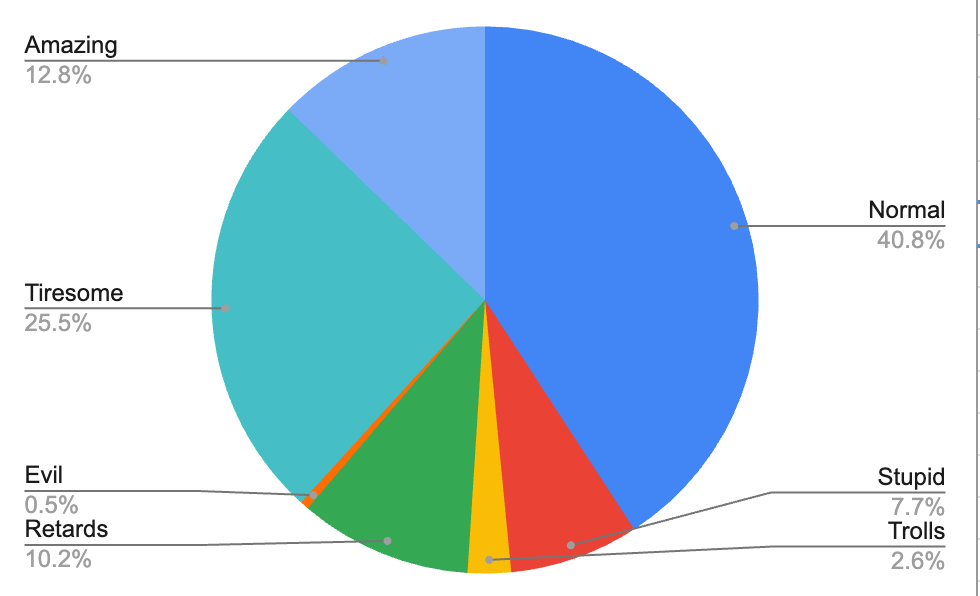
I think the easiest way to think about any social media platform, or group of humans in general, is as a distribution of types. For example, this is a rough approximation of my experience with people on Substack:
By contrast, I would say that Xitter looks something like this:
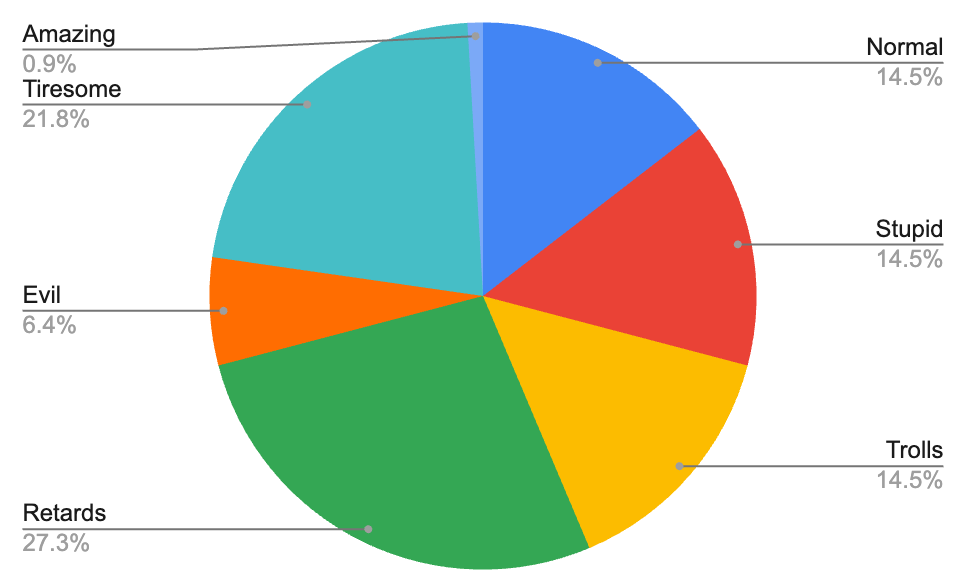
As you can see, I’ve divided users into 7 rough categories.
Normal: Pretty self-obvious. Just a “normal” person.
Stupid: Literally low IQ.
Trolls: Purposefully trying to frustrate you.
Retards: Someone who is not “bad faith” but is unable to parse your point. Often this is the result of a person being extremely partisan.
Evil: Again, self-explanatory.
Tiresome: A person who engages in arguments that are just frustrating/annoying/pointless. Usually, this takes the form of moralizing or statements that have little or nothing to do with the main point.
Amazing: The gems and New Western material.
Since these “types” are all different, they require different approaches to deal with.
Evil and trolly people I try to just block in order to minimize the risk of becoming the target of their undue attention. Sometimes I’ll mute a person who falls into these categories, and they will persist in causing problems in my comments unseen, but I have a zero-tolerance policy toward people who intend to inflict “harm”1 upon me.
Tiresome, stupid, and retarded people I usually mute, although sometimes I will make an allowance for someone who is tiresome if they regularly have interesting perspectives. The result of this strategy is that, from my perspective, Substack looks more like this:
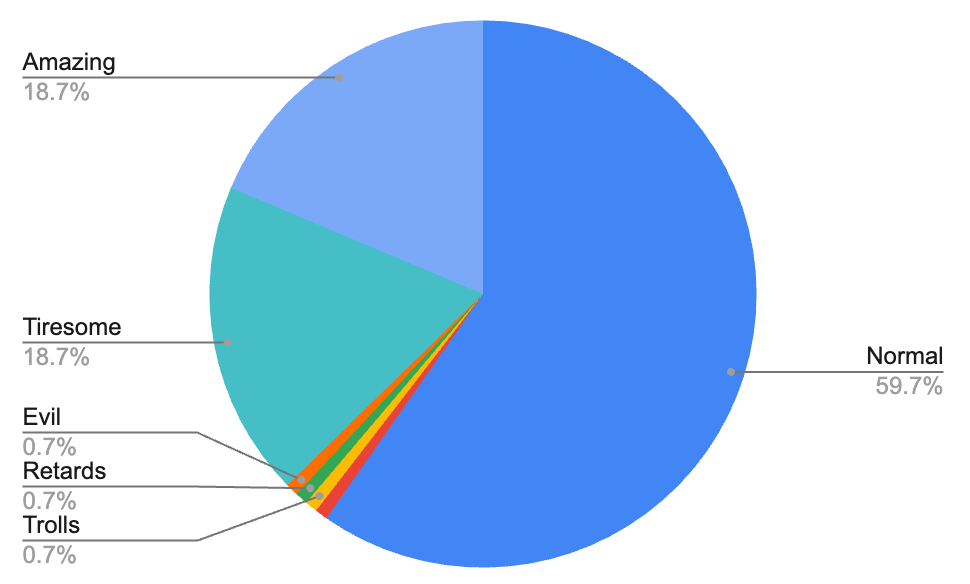
Now “normal” people are in the clear majority, and although some small number of evil, retarded trolls slip through the net, they are kept mostly to a minimum. The effect is that now my main source of discomfort is from “tiresome” people, but that is ok! I can live with some number of tiresome people because often it brings perspectives that I have missed.
To summarize, my logic for why I mute and block people is that not everyone is good faith, and I don’t like being frustrated by someone stupid or, even worse, cruel.
This, of course, creates a second-order problem of identifying which type a person is.
Since I don’t have perfect information, and all that I’m able to observe is their behavior on Substack, either in my comments or on their own page I have to rely on noisy signals and intuition. In brief, I use Bayes’ theorem:
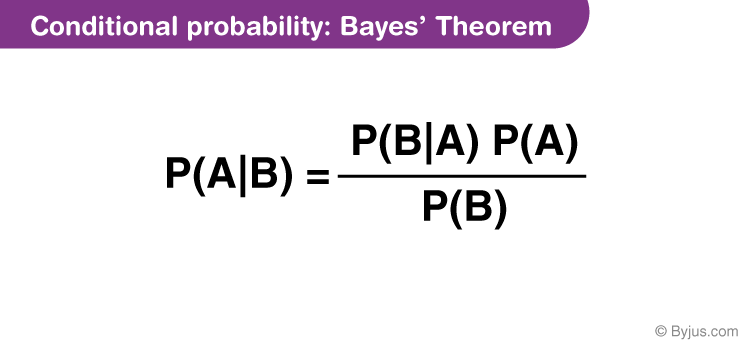
Basically, I have some prior probability on a person’s type, then I’ll take a signal—their behavior, publication, etc.—and update that prior. If I become confident enough they are a “bad” type, I will either mute or block them.
Now restating this, in a less esoteric way, normally I follow the following recipe.
If a person has no publication, is not subscribed to me, and says something that is stupid or annoying, I will instantly mute them. If they are subscribed to me, I will give them 3 strikes, and on the 3rd annoying comment without something substantive, I will mute them. If, after being muted, I see them continuing to be frustrating, eventually I will just block them.
For paid subscriber—you all—I will basically never mute or block anyone2 because their money has indicated that they are genuinely interested in me and want to engage in good faith. Also, I’m not above bribery.
Finally, with larger accounts, it is a little more complex. Frankly, I want to succeed on Substack, and getting attention from a larger publication, even if that attention isn’t friendly, is just good for me. Also, as a good Bayesian, the fact that their accounts are large is a signal they have something interesting to say, so I’m generally more forgiving. As a result I will avoid blocking anyone with over 1k subscribers unless they are repeatedly saying rude or aggressive things, and I’ll even be hesitant to mute them, although I still will if they are frustrating me enough.
The TL;DR on all of this is that I think the mute and block buttons are quite good, and if you currently aren’t using them to change your experience on Substack, I recommend you do.
No one has a right to your attention, and the externalities from having an echo chamber are better fought by seeking out high-quality perspectives you disagree with. Having a person in your comments spamming the N-word or in your DMs issuing death threats is good for no one, not even the person doing it. But even less extreme versions of this behavior can make having a large account unusable. I get a lot of interactions every day across my articles and notes and I’m not even a particularly big writer. I have to filter people or I will lose my sanity and everything good will be lost in a whirlwind of nonsense.
“We must cultivate our garden.” — Voltaire
It’s social media, so let’s keep the quotes to convey the levity of all of this.
I haven’t yet, but I suppose some set of circumstances exists wherein I would.