2026 Community Presidential Tier List - Results!
The "official" ranking
Summary: The essay presents results from a community tier list ranking U.S. presidents using a five-point scale that converts letter grades (S, A, B, C, F) to numerical scores ranging from +3 to -3. The author analyzes the rankings through multiple lenses, including average scores with standard deviation error bars and an intensity-weighted ranking that emphasizes voter conviction. Individual president breakdowns reveal how controversial each leader was within the community.
The Tier List:
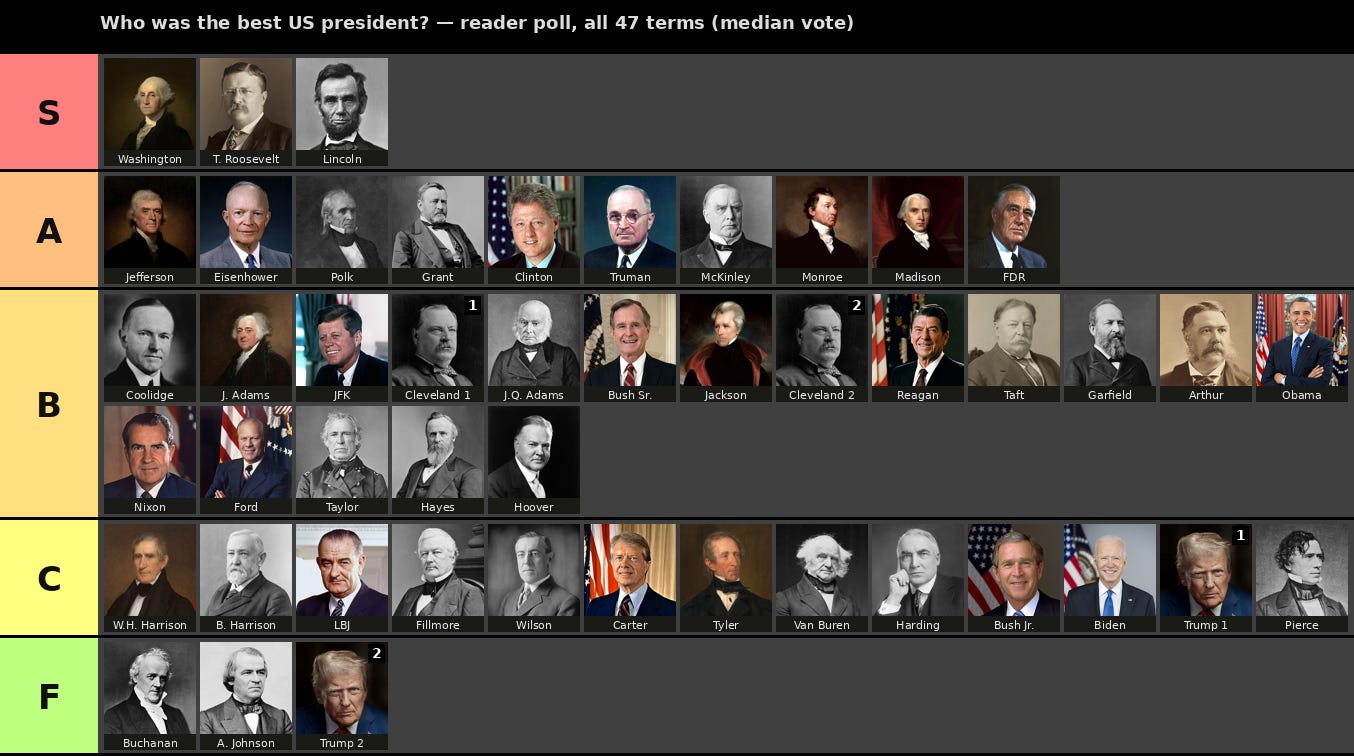
You can find the data here. Note: Substack rounds vote percentages so they may not always add to exactly 100. Also Trump 2 is still open as I write this so make sure to go and vote.
!!make your own and share it!!
How the scoring works:
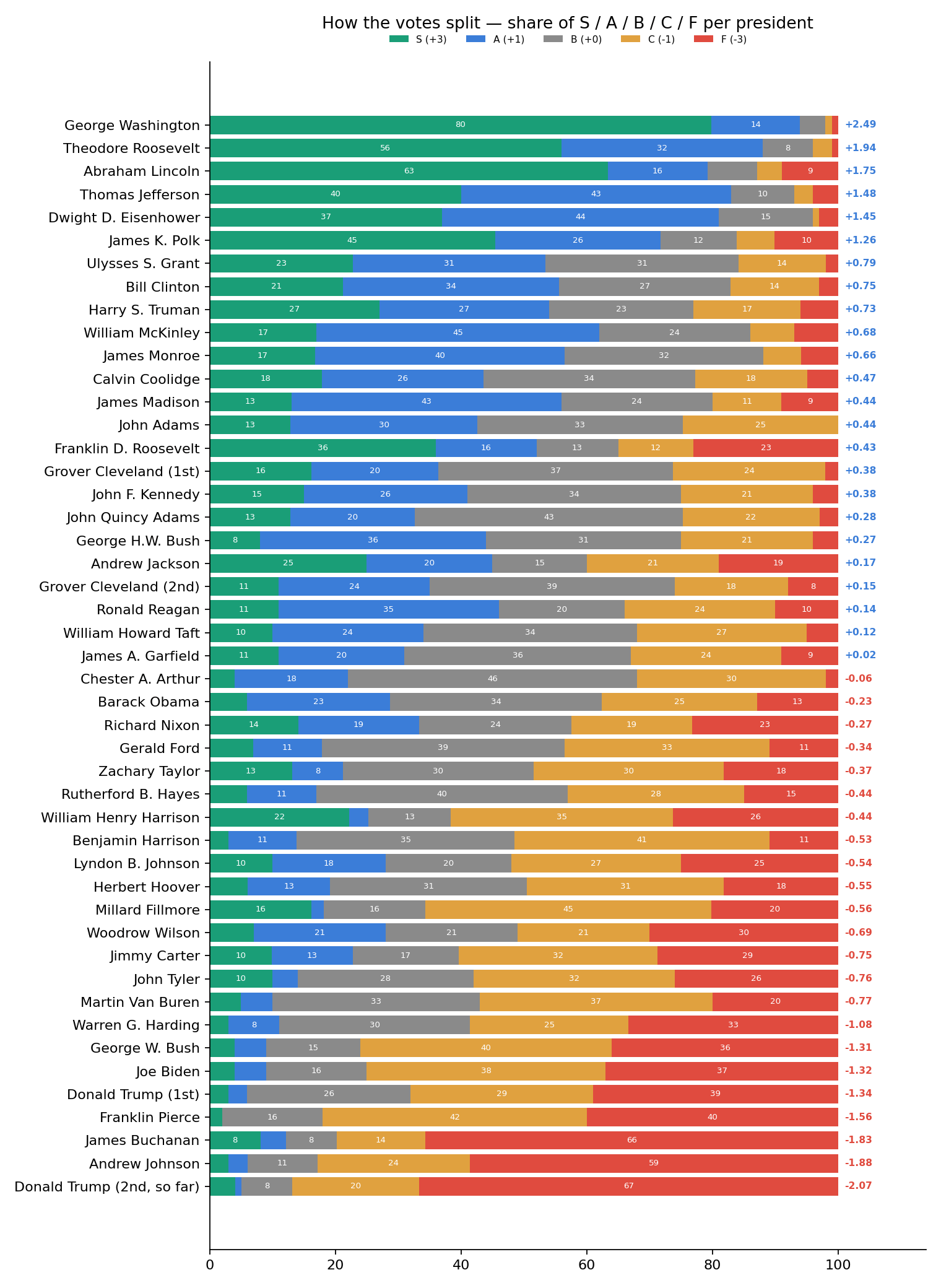
The format is simple. Each president gets rated S, A, B, C, or F. To turn letters into numbers, I mapped them onto a five-point scale: S = +3, A = +1, B = 0, C = −1, F = −3.
Headline result:
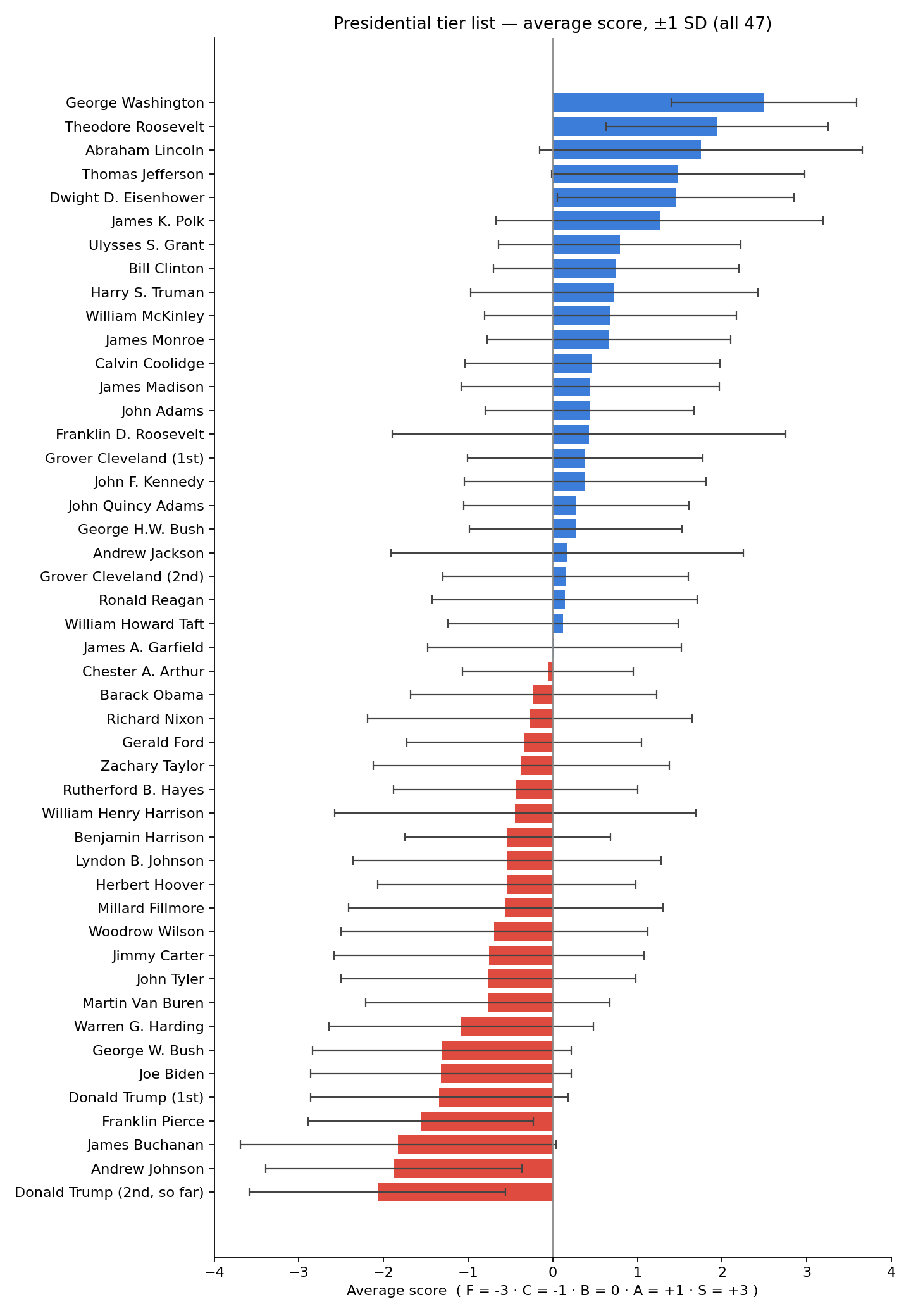
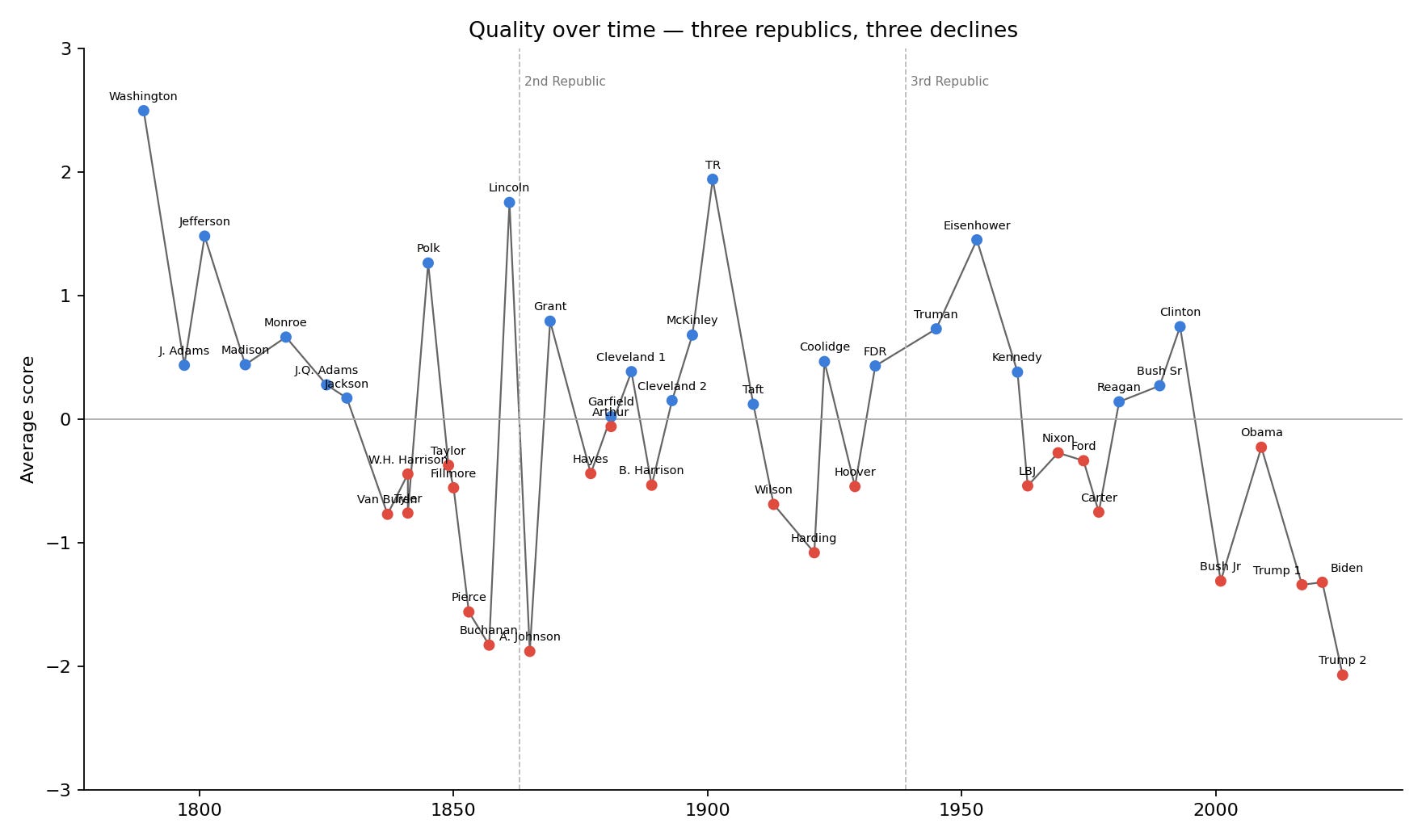
Average that across every vote and each president gets a score. Here’s how they rank, with error bars showing plus or minus one standard deviation.
Over time:
Intensity Weighted:
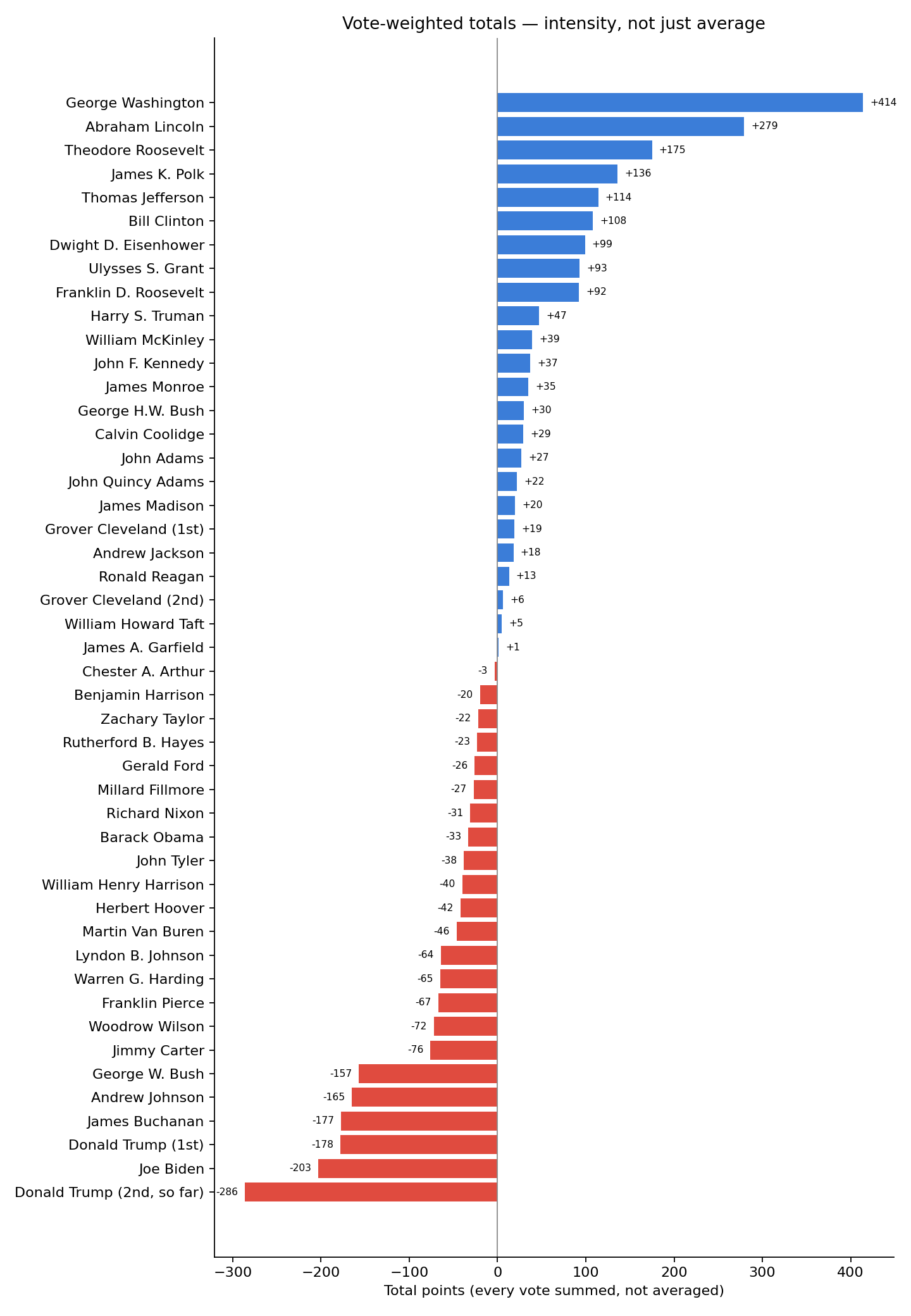
If you switch from the average score to the absolute totals — simply summing every vote rather than averaging — you get a ranking weighted by how much people care.
The breakdown, president by president:
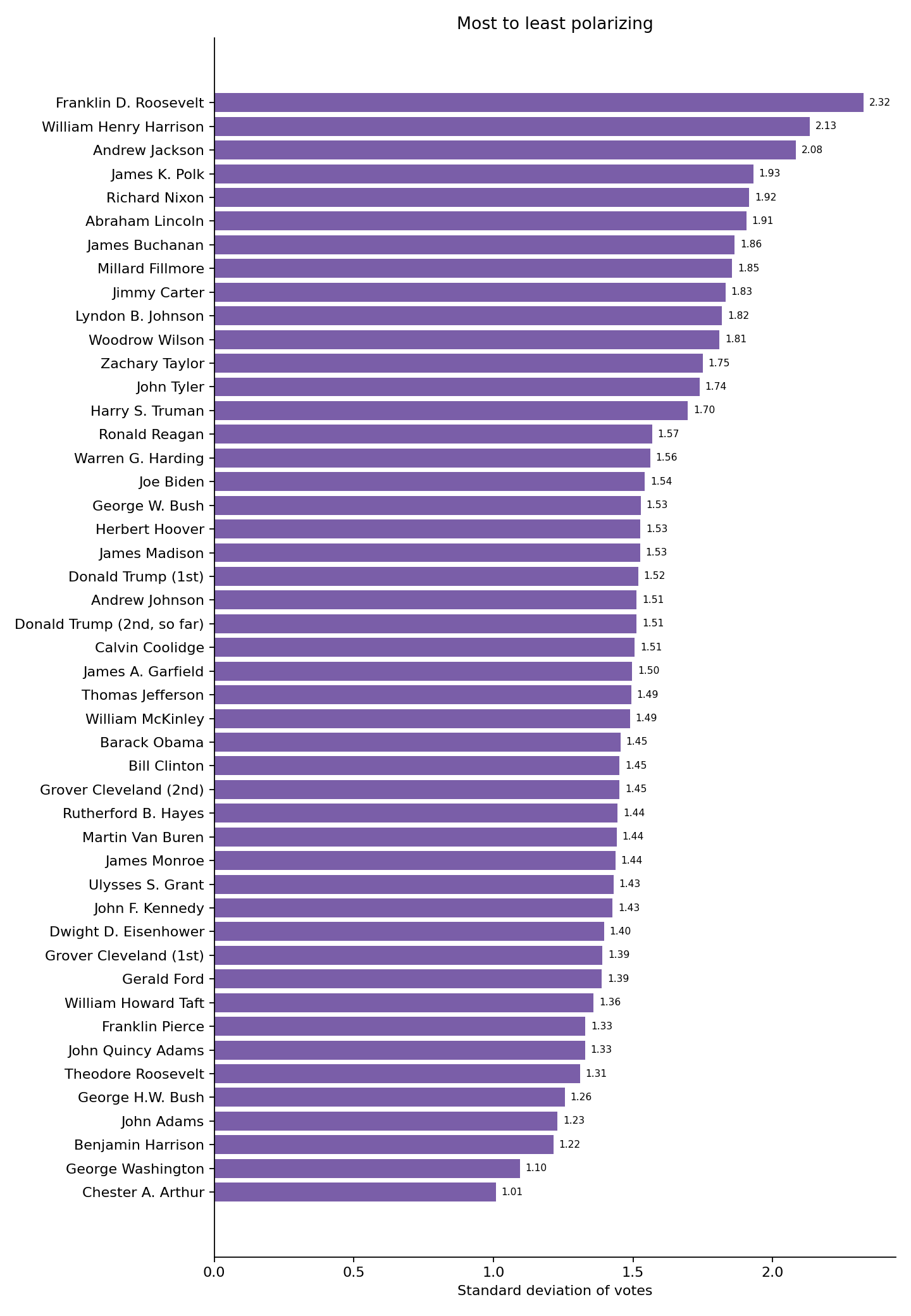
Some presidents were more controversial than others:
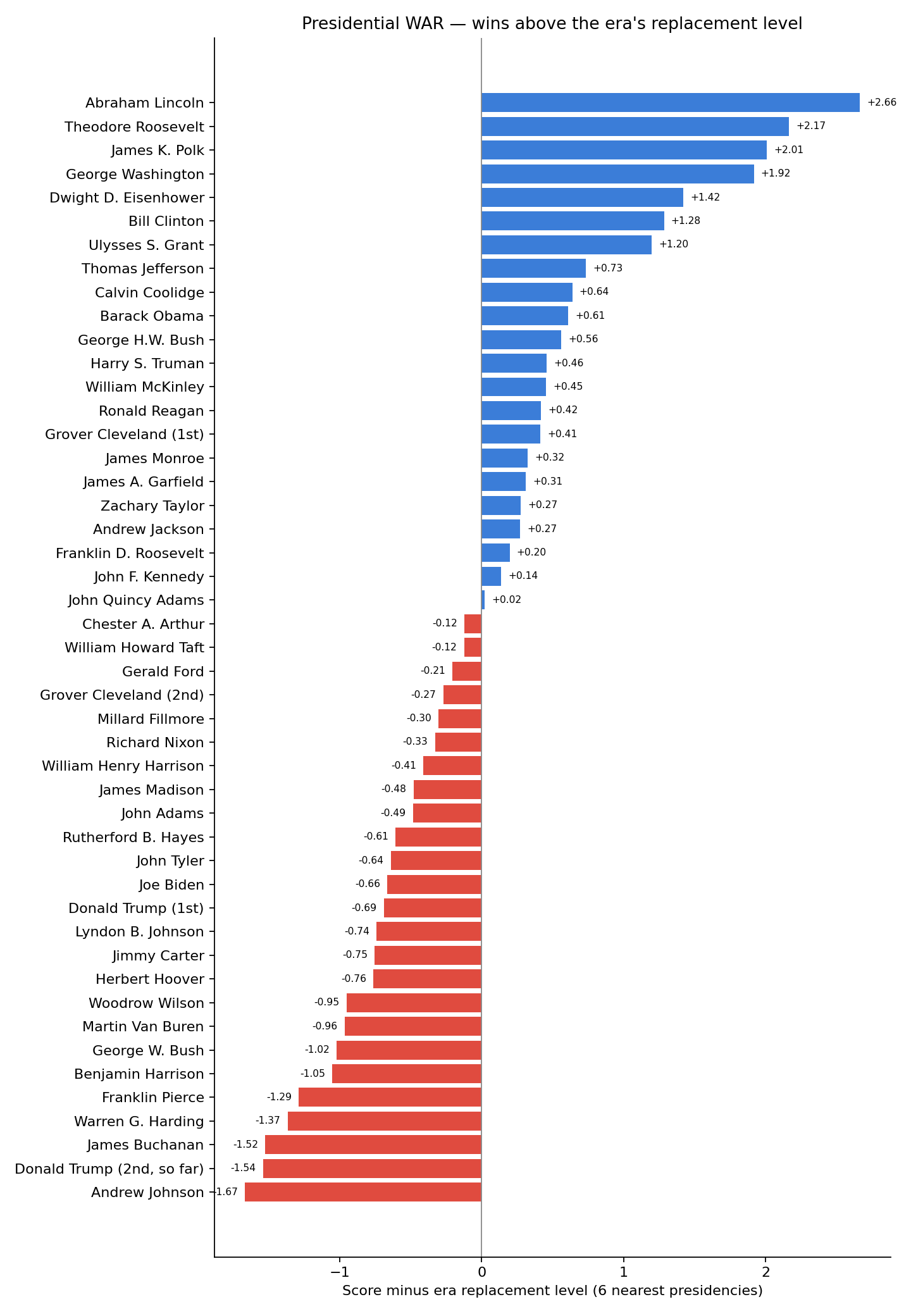
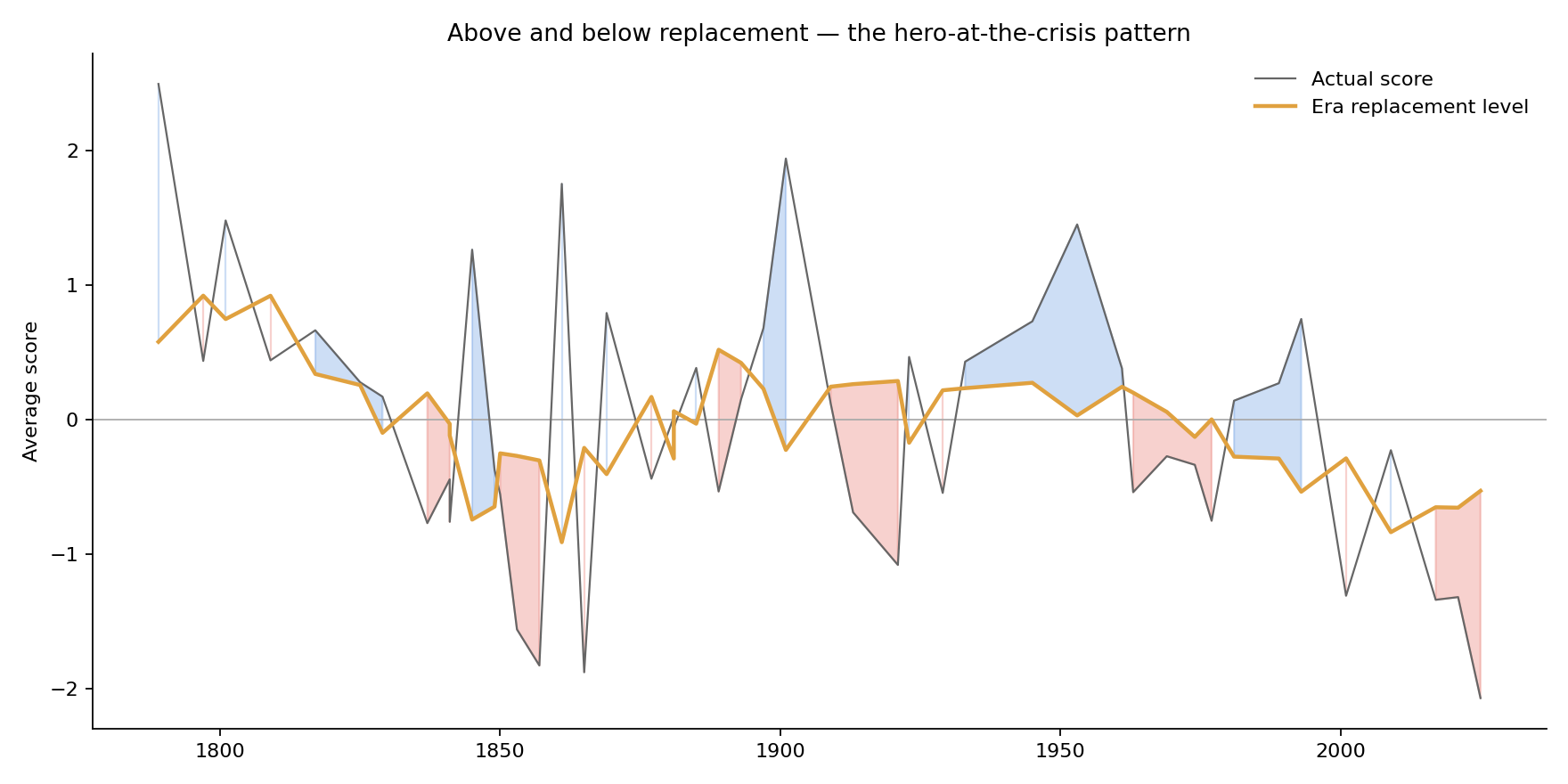
WAR(6 nearest presidents):